

Benefits of Eco-Friendly Gardening Tools: 2026 Guide
Table of Contents
- What Counts as an Eco-Friendly Gardening Tool
- 1. Lower Emissions and Cleaner Air at Home
- 2. Durability and Long-Term Cost Savings
- 3. Less Landfill Waste and a Longer Tool Life
- 4. Healthier Soil, Cleaner Water, Better Growing
- 5. Ergonomic Design and Easier Days in the Yard
- Benefits of Electric Lawn Equipment: Quieter, Cleaner, Cheaper to Run
- Best Eco-Friendly Garden Tools 2025: What to Look For This Season
- Frequently Asked Questions
Last Updated: September 22, 2026
What Counts as an Eco-Friendly Gardening Tool
Eco-friendly gardening tools are any implements designed to reduce environmental harm across their full life cycle, materials, power source, maintenance, and disposal. That definition matters because "green" labels get applied loosely, and the benefits of eco-friendly gardening tools only hold up when you look past the marketing sticker.
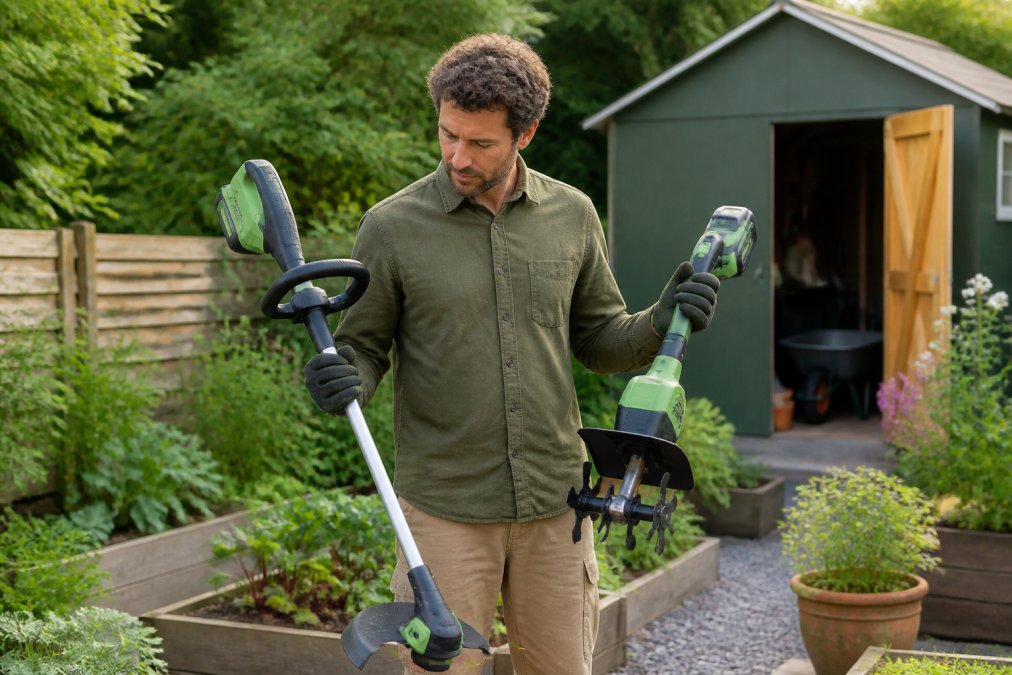
At Tools, Handbags, and More, shoppers ask how to tell a genuinely sustainable tool from one that just has a leaf on the box. The answer comes down to materials and power source.
Materials That Earn the Label
Sustainable tool materials are those sourced and produced with lower environmental cost and a longer usable life. Common examples include FSC-certified wood and bamboo handles, recycled steel heads, and non-toxic finishes.
Bamboo regrows quickly, and recycled steel cuts demand for newly mined ore, both keep materials in use instead of heading to landfill.
Watch for vague claims: "eco" and "natural" mean little without a certification or stated material. A listing that names recycled steel or FSC-certified wood is telling you something concrete.
Manual, Electric, and Gas: The Real Divide
The power source often matters more than the handle material. Gas tools burn fuel on site, produce exhaust, and need ongoing maintenance like oil changes and spark plugs. Electric and manual tools skip that entirely.
Electric models run on battery or cord, produce no direct emissions at the point of use, and start without pull cords or fuel mixing. Manual tools use only your own effort, the lowest-impact option for small jobs.
Here is the trade-off most guides skip: electric tools carry a manufacturing footprint tied to their batteries.
1. Lower Emissions and Cleaner Air at Home
Switching to electric and manual tools cuts emissions right where you garden. Gas equipment releases exhaust and fine particulates during use, and those emissions land in the air around your home, not at some distant plant.
2. Durability and Long-Term Cost Savings
Durable construction is where eco-friendly tools quietly win on price: spreading the tool's manufacturing footprint and purchase price across more seasons of use. A tool that lasts ten years costs less per year than a cheap one replaced every other season, even when the upfront price is higher.
Where Tools Actually Fail
Repairability is the other half of that equation, and the part most buyers overlook. Garden tools rarely die all at once, they fail at predictable wear points:
- String trimmers: the bump-feed spool and the line itself wear out first, long before the motor or battery.
- Pruners and loppers: the cutting blade dulls or chips; the pivot bolt loosens; the return spring fatigues.
- Shovels and cultivators: the handle-to-head joint loosens, and wooden handles crack at the grain if stored wet.
- Battery tools: the battery pack loses capacity over hundreds of charge cycles, while the tool body remains functional.
Before you buy, check four things:
- Whether replacement parts, spools, blades, springs, handles, are sold separately
- Whether the battery platform is shared across other tools in the same line
- Whether the manufacturer publishes a repair guide, parts diagram, or parts list
- Whether fasteners are standard (hex, Phillips) rather than proprietary
Manufacturing vs. Use: Where the Carbon Actually Sits
For gas tools, most lifetime emissions come from fuel burned during use, every tank adds exhaust and particulates on site. For battery tools, the picture flips: the battery and motor carry a concentrated manufacturing footprint, while the use phase is comparatively clean because the electricity comes from the grid.
3. Less Landfill Waste and a Longer Tool Life
Waste reduction starts with buying less often. Every tool you repair instead of replace is one less bulky, mixed-material item in the waste stream, garden tools are hard to recycle once discarded.
Repair and Refurbishment Beat Replacement
A common mistake is tossing a tool the moment it underperforms. Often the fix is a worn part, not a dead tool. String trimmers, for instance, usually just need fresh line.

End-of-Life Disposal and Recycling
When a tool finally does give out, disposal matters. Batteries should never go in household trash. They belong at a designated battery recycling drop-off, and many hardware stores and municipal sites accept them.
4. Healthier Soil, Cleaner Water, Better Growing
Soil health improves when you cut chemical inputs and reduce disturbance. Soil is a structured matrix of mineral particles, organic matter, air and water pores held together by fungal threads and root exudates; tools that cultivate lightly, rather than churning the ground, protect that structure.
The Carbon Question Nobody Asks
Most soil-health advice stops at 'disturb less.' The harder question is where a tool's lifetime carbon sits. For gas tillers and trimmers, most emissions come from fuel burned during use, every tank adds exhaust and fine particulates on site. For battery tools, the battery and motor carry a concentrated manufacturing footprint, while the use phase is comparatively clean because the electricity comes from the grid.
End-of-Life: What Happens When the Tool Gives Out
Soil health and disposal are connected more than most guides admit. When a tool finally fails, how you retire it determines whether its materials return to the soil or sit in a landfill.
- Batteries should never go in household trash. They belong at a designated battery recycling drop-off, and many hardware stores and municipal sites accept them.
- Metal heads and handles can often go into scrap metal recycling.
- Untreated wood handles can be composted; treated or painted wood should not.
- Plastic bodies are the hardest to recycle, which is another reason to favor repairable designs in the first place.
5. Ergonomic Design and Easier Days in the Yard
Ergonomic design keeps you gardening longer with less strain. Lightweight tools, balanced weight distribution, and comfortable grips reduce fatigue and lower strain-injury risk during repetitive work.
Look for these features:
- Cushioned, non-slip grips
- Adjustable handles or telescoping shafts
- Balanced weight near the hand, not the head
- Quiet operation, which matters for electric and manual tools
Benefits of Electric Lawn Equipment: Quieter, Cleaner, Cheaper to Run
Electric lawn equipment is quieter, produces no exhaust at the point of use, and costs less to run than gas. There is no fuel to buy, no oil changes, and no winterizing. You charge a battery and go.
Here is how the main options compare:
| Power Source | Emissions at Use | Ongoing Cost | Best For |
|---|---|---|---|
| Manual | None | Lowest | Small beds, light trimming |
| Electric (battery) | None | Low | Most home yards |
| Electric (corded) | None | Low | Small yards near an outlet |
| Gas | Exhaust and particulates | Highest | Very large properties |
Best Eco-Friendly Garden Tools 2025: What to Look For This Season
Choosing sustainable garden tools comes down to a short checklist you can run in the store or online. The best eco-friendly garden tools 2025 shoppers pick share the same traits: durable construction, a clean power source, and replaceable parts.
Use this checklist before you buy:
- Material is named and certified (recycled steel, FSC-certified wood, bamboo)
- Power source is manual or electric, not gas
- Replacement parts and spools are sold separately
- Battery is shared across a tool platform you can grow into
- Finish is non-toxic and the tool is repairable
- There is a plan for battery recycling at end of life
Frequently Asked Questions
Are electric garden tools more sustainable than gas-powered alternatives?
For most home gardens, yes. Electric tools produce no exhaust at the point of use, so they avoid the carbon emissions and fumes a gas engine releases every time you start it. They also skip the fuel spills and stale-gas disposal that come with two-stroke equipment. The trade-off is battery manufacturing, which carries its own footprint. Running a tool for years on the same battery is what makes the electric choice pay off environmentally.
How do eco-friendly materials improve the durability of gardening equipment?
Materials like recycled steel and bamboo handles hold up because they are chosen for strength, not for the cheapest possible price. Recycled steel keeps its structural properties through the recycling process, so a forged head stays sharp and resists bending. Bamboo is dense and naturally resistant to moisture, which means it will not rot the way low-grade wood does. The result is a tool that survives more seasons before it needs replacing.
Do eco-friendly gardening tools perform as well as traditional options?
In most home garden tasks, they match or beat traditional tools. A cordless string trimmer with an automatic line-advance system cuts edges cleanly without the pull-start hassle of a gas trimmer. A cordless cultivator with an 8-inch working width loosens soil in tight beds where a larger tiller will not fit. The gap shows up mainly on very large properties or heavy clearing jobs, where gas still wins on raw runtime.
How does choosing sustainable tools support a zero-waste lifestyle?
Every tool you repair instead of replace keeps metal, plastic, and packaging out of the landfill. Buying spools, batteries, and replacement parts for a tool you already own extends its working life by years. When a tool finally wears out, look for recycling options for the battery and metal components. That approach, combined with composting yard waste instead of bagging it, moves a household closer to zero waste without a drastic lifestyle change.
The hardest part of going green in the garden is not the tools, it is finding the right ones without bouncing between a dozen sites. Tools, Handbags, and More carries cordless Ryobi equipment on a shared 18V platform, stocks the replacement spools that keep your tools out of the landfill, and will track down specific models through our custom sourcing service when they are not in stock. Get started with Tools, Handbags, and More and build a garden toolkit that lasts.