

Best Alternatives to Target for Home Goods in 2026
Table of Contents
- Why Shoppers Are Looking for Home Goods Alternatives
- What to Look for in Online Home Goods Retailers
- Affordable Home Decor Stores: Where to Find Value
- Ethical Shopping Alternatives for Conscious Consumers
- Direct-to-Consumer and Pre-Loved Home Goods
- Comparing Logistics: Shipping, Returns, and Availability
- How Tools, Handbags, and More Fits as a Home Goods Alternative
- Conclusion
- Frequently Asked Questions
Last Updated: September 13, 2026
Why Shoppers Are Looking for Home Goods Alternatives
Shoppers searching for the best alternatives to Target for home goods are usually chasing one of three things: lower prices, harder-to-find items, or a store that actually helps them track down something specific. Big-box chains cover the basics well, but they stock what sells at scale, not what every household needs. When a shopper wants a particular vintage bowl, a pre-loved designer bag, or a tool that never made it to a mainstream shelf, the standard retail run stops working.
This guide from Tools, Handbags, and More breaks down what separates a genuinely useful alternative from a simple swap. Below, we cover the criteria that matter most, from shipping logistics to quality-to-price ratio, and show where a personalized approach beats a generic catalog.
What to Look for in Online Home Goods Retailers
An online home goods retailer is a store that sells household goods, decor, and everyday essentials through a website rather than a physical location. The best ones compete on three fronts: how fast and affordable shipping is, how clearly they handle returns, and whether their inventory actually overlaps with what you need. Most listicles stop at naming stores. This section instead gives you the mechanics to score any retailer against your own list, so you can tell a genuinely useful alternative from a simple swap.
Shipping Logistics and Return Policies
Shipping speed and return terms often decide whether an online purchase is worth it. A store with a wide inventory but slow, expensive shipping creates more friction than a smaller shop that ships quickly and accepts returns without a fight. The practical move is to price the round trip, not just the outbound order.
Work through these checks before you buy:
- Carrier and service level. Confirm which carrier handles the shipment and whether the store offers ground, expedited, or overnight tiers. A store that only ships one slow tier is a poor fit for a time-sensitive replacement.
- Free-shipping threshold. Many retailers waive shipping above a cart minimum. Calculate whether adding a low-cost essential gets you over the line more cheaply than paying the flat rate.
- Return window start date. The clock usually starts at delivery, not at order (the FTC). Note the exact number of days and whether weekends count.
- Restocking fees. Some sellers deduct a percentage on opened non-defective items. That fee can erase the savings on a discounted purchase.
- Who pays return shipping. On a defective item, the seller should cover it (consumer.ftc.gov). On a change-of-mind return, you usually do. Budget for that cost up front.
- Refund vs. store credit. A refund returns cash; store credit locks you into a second purchase. Know which one you are getting.
For custom sourcing, confirm the return terms in writing before you commit. That single step prevents most disputes.
Quality-to-Price Ratio and Inventory Variety
Quality-to-price ratio measures how much durability and finish you get for each dollar, not just the sticker price. A cheap item that fails in a year costs more than a well-made one that lasts. A simple way to estimate it is to divide the price by the expected years of service and compare that annualized figure across options.
Inventory variety matters just as much. A store that carries tools, handbags, decor, and personal accessories in one place saves you from bouncing between five sites. Overlap between categories is where a single-destination shop earns its keep.
To map inventory overlap, list the specific items you need by category, then check each retailer against that list. Where two stores share categories, you can consolidate into one cart and one shipment. Where they do not, you are managing two return policies and two delivery windows.
| What to Check | Why It Matters | Red Flag |
|---|---|---|
| Shipping cost and speed | Affects total price and timing | Costs revealed only at checkout |
| Free-shipping threshold | Can lower your effective price | No threshold published |
| Return window and start date | Protects you if the item disappoints | Window starts at order, not delivery |
| Restocking fee | Eats into savings on returns | Fee buried in policy page |
| Material and warranty | Signals real durability | No warranty stated at all |
| Category overlap | Saves multiple shopping trips | Narrow, single-category catalog |
Affordable Home Decor Stores: Where to Find Value
Affordable home decor stores win on value, not just low prices. The trick is separating genuine value from a discount that hides lower quality.
A few practical ways to judge value:
- Compare material quality, not just the price tag
- Check whether the item is new, pre-loved, or vintage, since each carries different expectations
- Look for pieces that work across rooms rather than one-off trends
Vintage and pre-loved decor often delivers the best value-to-price ratio. A vintage Fenton Cobalt Carnival 3-Footed Bowl at $65, for example, is a functional piece with collectible appeal that mass-produced decor rarely matches. Value here comes from character and durability, not volume.

Ethical Shopping Alternatives for Conscious Consumers
Ethical shopping alternatives let buyers align purchases with their values. Ethical consumption means choosing stores that are transparent about where goods come from and how they are sold.
For home goods, that usually means:
- Buying pre-loved items instead of new, which extends a product's life (the EPA)
- Choosing sellers who describe condition honestly
- Prioritizing durable goods over disposable ones
Supply chain transparency is harder to verify with large chains than with smaller sellers who list exact condition and provenance. For conscious shoppers, a pre-loved Coach black signature C monogram crossbody at $85 offers a clear secondhand path that avoids new production entirely.

Direct-to-Consumer and Pre-Loved Home Goods
Direct-to-consumer and pre-loved home goods are reshaping how people shop for everyday essentials. Direct-to-consumer brands sell straight to buyers, often cutting out the middle layers that inflate prices. Pre-loved goods give quality items a second life at a fraction of retail.
Both models reward buyers who know what they want. Pre-loved accessories like a pre-loved Brahmin crocodile-embossed leather wristlet at $55 or a pre-loved Kate Spade red quilted tablet sleeve at $55 deliver brand quality without the new-item markup. The catch is availability: popular pieces come and go, so timing matters.
Comparing Logistics: Shipping, Returns, and Availability
Logistics decide whether an alternative store is practical, not just appealing. Shipping speed, return terms, and inventory availability vary widely, and the gap between them is where most buyer frustration lives. This is the comparison most guides skip, so here is a framework you can run against any retailer in about ten minutes.
In-Store vs. Online: Pick by Urgency
The first filter is whether you need the item today or can wait for delivery.
- In-store pickup or same-day. Best for urgent replacements like a broken kitchen tool or a stained towel set. You inspect the item before paying and skip shipping entirely, but you are limited to what that location stocks.
- Standard online shipping. Best for planned purchases and bulk orders. Expect a multi-day transit window plus processing time, which can add several days before the package even leaves the warehouse.
- Expedited online shipping. Best when you need it fast but cannot find it locally. The premium can rival the item's price on low-cost goods, so run the math first.
A useful rule: if the item costs less than the expedited shipping fee, buy it locally or wait for standard delivery.
The Four Logistics Numbers to Compare
| Factor | What to Confirm | Impact on You |
|---|---|---|
| Shipping reach | Delivery to your region and any category restrictions | Determines if the store is usable at all |
| Processing vs. transit time | Days before shipment plus days in transit | Sets your true delivery date |
| Return window and exclusions | Days allowed, start date, custom-order rules | Affects risk on special orders |
| Restocking fee | Percentage deducted on non-defective returns | Changes your real return cost |
| Inventory overlap | Shared categories with other stores | Fewer separate purchases |
| Stock reliability | In-stock vs. special order vs. backorder | Sets realistic delivery timing |
Geographic Availability
Not every store ships everywhere, and some restrict certain categories by region. Before you build a cart around a specific item, enter your delivery address at checkout and confirm the item is eligible. A store that looks nationwide on its homepage may exclude oversized furniture, aerosols, or flammable goods from certain routes. If a category is restricted, you need a second source for that item.
Inventory Overlap Mapping
Mapping where two stores' catalogs overlap tells you which items you can buy in one place and which require a second stop. Build a simple two-column list: items you need, and the stores that carry each. Any item appearing in only one store forces a separate order, a separate shipping charge, and a separate return policy. Consolidating overlapping items into a single retailer cuts the number of shipments and the number of policies you have to track.
How Tools, Handbags, and More Fits as a Home Goods Alternative
Tools, Handbags, and More is an online shop built for shoppers who want tools, handbags, and household items in one place, backed by real help finding what a standard catalog misses. Its standout feature is a custom sourcing service that tracks down specific items not currently in stock, from a particular tool to a limited-edition collectible.
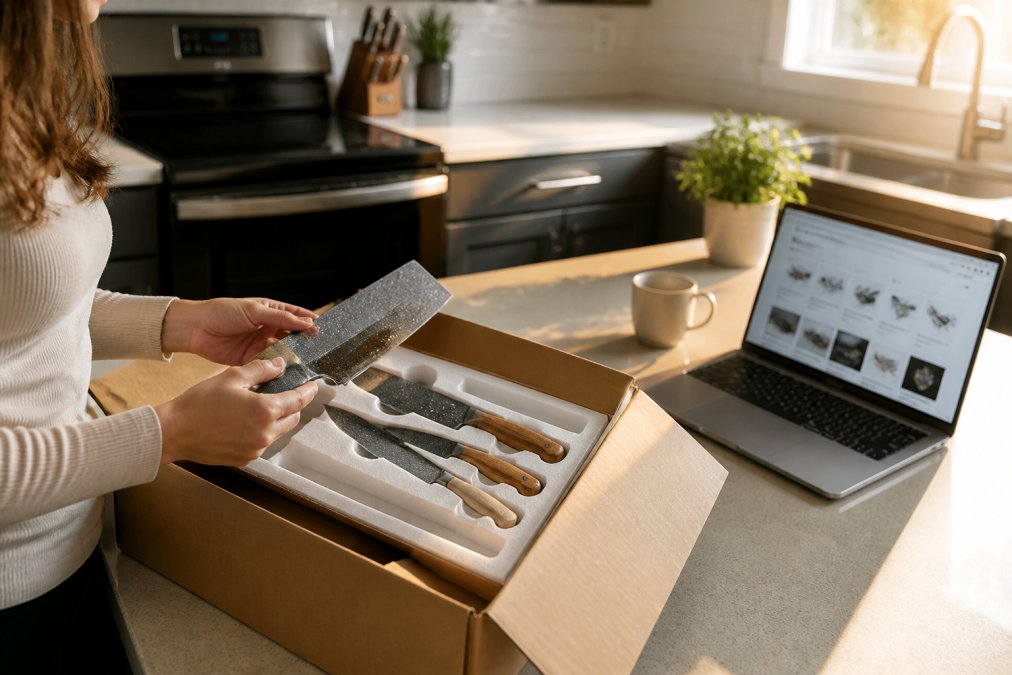
The catalog spans practical and personal categories. A kitchen example is the EVRYEALTH 6-Piece Marble Coated Knife Set at $48, which includes a chef's knife, bread knife, paring knife, utility knife, and peeler with stainless steel blades. For accessories, the shop carries pre-loved Coach and Kate Spade pieces, plus new items like the P9 plus max headphones at $25.

Where it differs from a standard retailer is the sourcing help. Instead of telling you an item is unavailable, the team works to locate it. For shoppers juggling household essentials and hobby gear, that single point of contact replaces several separate searches.
Conclusion
Finding the best alternatives to Target for home goods comes down to matching a store to what you actually need: fast logistics, fair returns, and inventory that overlaps with your list. When the item you want is obscure or out of stock everywhere, a store that hunts it down for you saves real time.
Tools, Handbags, and More is built for exactly that. Its custom sourcing service finds items not currently in stock, its catalog spans tools, handbags, and household goods in one place, and every order comes with personalized assistance rather than a dead-end "unavailable" message. Get started with Tools, Handbags, and More and let the team track down the specific items on your list.
Frequently Asked Questions
What store is a good substitute for Target for home goods?
Online home goods retailers like Tools, Handbags, and More offer a practical substitute by combining kitchen tools, pre-loved accessories, and custom sourcing in one place. Unlike big-box stores with fixed inventory, this model lets you request specific items not currently in stock. For affordable home decor stores, the trade-off is usually shipping time versus selection depth. Tools, Handbags, and More lists a 6-piece marble-coated knife set at $48.00, which shows how specialty online shops can compete on price for specific categories.
What are some ethical shopping alternatives to Target?
Ethical shopping alternatives focus on pre-loved goods, direct-to-consumer brands, and supply chain transparency. Tools, Handbags, and More carries pre-loved Coach, Kate Spade, and Brahmin accessories, which keeps usable items in circulation instead of producing new ones. For home goods, look for retailers that disclose materials and sourcing. The pre-loved Fossil pink leather wallet wristlet at $45.00 is an example of buying secondhand without sacrificing brand quality. These options appeal to budget-conscious shoppers who also care about ethical consumption.
Which is cheaper, HomeGoods or Target for home essentials?
Pricing varies by item and season, so no single store wins across the board. Discount retailers often beat big-box prices on clearance decor, while Target competes on everyday low prices for basics. Online home goods retailers like Tools, Handbags, and More price specific items directly: a 6-piece marble-coated knife set is $48.00, a vintage Fenton bowl is $65.00, and P9 plus max headphones are $25.00. Compare unit prices and shipping costs rather than assuming one retailer is always cheaper.
Where can I find unique home goods online that aren't mass-produced?
Specialty online home goods retailers and pre-loved marketplaces carry one-of-a-kind items you won't find in big-box stores. Tools, Handbags, and More lists a Vintage Fenton Cobalt Carnival 3-Footed Bowl at $65.00, a piece with no mass-market equivalent. For decor, look for retailers that specialize in vintage, artisan, or limited-run products. Custom sourcing services can also track down specific items not currently in stock, which is useful for collectors seeking unusual home goods.
How do shipping and return policies compare for online home goods retailers?
Shipping speed and return windows vary widely among online home goods retailers. Some offer free shipping over a threshold, while others charge flat rates. Return policies range from 14 to 30 days, and pre-loved items sometimes have stricter rules. Tools, Handbags, and More offers custom sourcing for out-of-stock items, so confirm return terms before ordering. Always check whether return shipping is covered and whether the retailer accepts returns on clearance or pre-loved goods before you buy.