

Best Hand Tools for Home Repairs: 2026 Guide
Table of Contents
- The Best Hand Tools for Home Repairs: Our Top Picks
- Building Your Essential Home Repair Tool Kit
- DIY Home Repair Safety Tips Every Homeowner Should Know
- Tool Ergonomics: Choosing Hand Tools That Reduce Fatigue
- How to Organize a Home Tool Box for Any Space
- Tool Maintenance and Care: Making Your Hand Tools Last
- Verdict: Which Hand Tools for Home Repairs Should You Buy First?
- Conclusion
Last Updated: August 13, 2026
The Best Hand Tools for Home Repairs: Our Top Picks
You don't need dozens of tools for home repairs, about ten well-chosen hand tools bought right the first time handle 90% of household jobs. At Tools, Handbags, and More, we've compiled this guide to help homeowners build a kit that actually works.
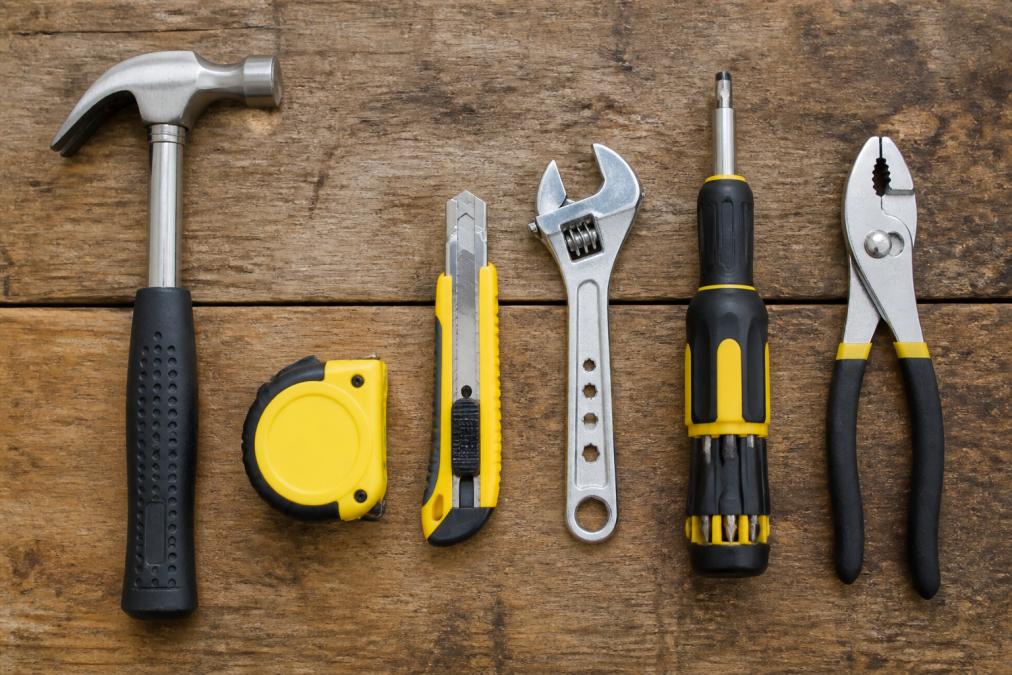
Quick Picks:
- Best Measuring Tool: STANLEY FATMAX 25-Foot Tape Measure, 11-foot standout, bold markings, magnetic hook
- Best Multi-Tool Screwdriver: Klein Tools 11-in-1 Screwdriver/Nut Driver, replaces an entire drawer of bits
- Best Hammer: Estwing E3-16S Claw Hammer, one-piece steel, shock-absorbing grip
- Best Pliers: CHANNELLOCK 440 Tongue and Groove Pliers, high-carbon steel, non-slip jaw
- Best Utility Knife: Milwaukee FASTBACK Folding Utility Knife, one-handed open, tool-free blade swap
Measuring and Marking: Tape Measure and Torpedo Level
Accurate measurement is where every home repair starts. The STANLEY FATMAX 25-Foot Tape Measure (FMHT33865) offers an 11-foot standout for solo measurements without blade collapse. The 1.25-inch wide blade uses bold black font for readability, and the BladeArmor coating protects the first six inches from abuse. The Tru-Zero magnetic end hook snaps onto metal fasteners for one-person measurements, and stud center markings at 16 and 19.2 inches simplify wall-mounting tasks.
Pair the tape measure with a torpedo level, a compact 9 to 12-inch spirit level for checking horizontal and vertical alignment on shelves, frames, and appliances.
Fastening and Driving: Multi-Bit Screwdriver, Claw Hammer, and Adjustable Wrench
Most home repairs come down to driving or removing fasteners. Three tools cover the vast majority of those situations.
Klein Tools 11-in-1 Screwdriver/Nut Driver (32500): A multi-bit screwdriver is the single most-used tool in any home kit. The Klein 11-in-1 holds eight popular tips and converts to three nut driver sizes. The Cushion-Grip handle delivers genuine torque without hand fatigue.
Estwing E3-16S Claw Hammer: A 16 oz. rip claw hammer forged from a single piece of solid steel. One-piece construction eliminates the failure point where head meets handle. Estwing's patented Shock Reduction Grip absorbs vibration on projects involving more than a few nails.
Adjustable Wrench: A 10-inch adjustable wrench handles fastening tasks where pliers would damage a nut's surface. Look for tight jaw fit, loose jaws round off fastener corners quickly.
Gripping and Turning: Slip-Joint Pliers, Needle-Nose Pliers, and Tongue and Groove Pliers
Slip-joint pliers are the general-purpose gripping tool. The pivot point adjusts to two positions, giving you wider jaw opening for larger objects.
Needle-nose pliers are for precision work, reaching into electrical boxes, bending wire, retrieving dropped fasteners from tight spaces.
CHANNELLOCK 440 Tongue and Groove Pliers: For plumbing work and larger fastening tasks, the CHANNELLOCK 440 uses high-carbon C1080 steel with right-angle, laser heat-treated teeth that grip in all directions without slipping. The undercut tongue and groove design prevents jaw backup under load, and the PermaLock fastener eliminates loosening.
Cutting and Utility: Utility Knife and Handsaw
Milwaukee FASTBACK Folding Utility Knife: A utility knife handles drywall scoring, cutting rope and strapping, opening materials, and dozens of other tasks. The press-and-flip mechanism opens one-handed. Tool-free blade changes mean you swap a dull blade in seconds.
Handsaw: A 15-inch general-purpose handsaw with a hardened-tooth blade covers most household cutting tasks. Look for an ergonomic grip that keeps your wrist in a neutral position during the cutting stroke.
Building Your Essential Home Repair Tool Kit
An essential home repair tool kit is a curated set of hand tools that covers the most common household maintenance and repair tasks without redundancy or gaps. A well-built starter kit handles roughly 80% of home repairs without requiring additional purchases.
| Tool | Primary Use | Why It's Essential |
|---|---|---|
| Tape measure (25 ft) | Measuring and marking | Solo measurements, framing, furniture |
| Torpedo level | Alignment checks | Shelves, fixtures, appliances |
| Multi-bit screwdriver | Fastener driving | Replaces 8+ individual screwdrivers |
| Claw hammer (16 oz) | Nailing and demolition | Framing, hanging, nail removal |
| Adjustable wrench (10 in) | Nut and bolt turning | Plumbing, appliance work |
| Slip-joint pliers | General gripping | Wire, small fasteners |
| Needle-nose pliers | Precision gripping | Electrical, tight spaces |
| Tongue and groove pliers | Pipe and large fasteners | Plumbing repairs |
| Utility knife | Cutting and scoring | Drywall, packaging, rope |
| Handsaw | Cutting lumber and trim | Carpentry, PVC, general cuts |
| Hex key set (Allen wrenches) | Set screws and furniture | Flat-pack furniture, bike repairs |
| Flashlight or headlamp | Visibility | Crawlspaces, attics, dark cabinets |
A hex key set and a flashlight round out a twelve-piece starter kit that handles nearly any basic home maintenance task.
Budget vs. Professional Grade: What Actually Matters
For a home repair kit, spend more on tools with the most contact time: your screwdriver, hammer, and pliers. Ergonomics and grip quality matter more on these than on tools you use occasionally. A cheap screwdriver used daily causes real hand fatigue; a quality Cushion-Grip handle makes extended fastening work noticeably easier.
Tape measures, levels, and utility knives perform well at mid-range prices for home use. According to Consumer Reports' tool buying guidance, the most common regret among DIY homeowners is buying the cheapest available option and replacing it within two years. Buying once at mid-range or above costs less over time.
DIY Home Repair Safety Tips Every Homeowner Should Know
DIY home repair safety means understanding which tasks are within your skill level, using the right protective equipment, and knowing when a professional is the correct call.
Key principles apply across every project: read the tool's documentation before first use, clear the work area of trip hazards, secure the workpiece with clamps, never use a damaged tool, work in adequate lighting, and know where your home's electrical panel, water shutoff, and gas shutoff are. The CPSC home tool safety guidelines provide specific guidance on safe tool use, storage, and maintenance for residential settings.
Personal Protective Equipment: Safety Glasses, Work Gloves, and More
Safety glasses are non-negotiable for any cutting, hammering, or drilling task. Flying debris causes eye injuries that safety glasses prevent entirely. ANSI Z87.1 is the standard to look for on safety eyewear.
Work gloves protect against cuts, abrasion, and vibration. For general hand tool use, a medium-weight work glove with grip material on the palm gives protection without sacrificing dexterity.
Hearing protection matters more than most homeowners realize. Extended use of hammers and power tools in enclosed spaces exceeds safe noise exposure levels. Foam earplugs are inexpensive and effective for tasks lasting more than a few minutes.
Tool Ergonomics: Choosing Hand Tools That Reduce Fatigue
Tool ergonomics is the design principle that hand tools should fit the natural mechanics of the human hand, wrist, and arm to reduce fatigue and injury risk during use.
Handle shape and diameter: A handle that's too thin or too thick forces your grip muscles to compensate. Most adults work comfortably with a handle diameter between 1.25 and 1.5 inches for screwdrivers and similar tools. The Klein 11-in-1 Cushion-Grip and the CHANNELLOCK BLUE comfort grips are both designed around this principle.
Weight distribution: A well-balanced tool feels lighter than it is. The Estwing claw hammer's one-piece construction gives it a balance that wood-handled hammers of the same weight can't match.
Grip surface: Rubberized or overmolded grip surfaces reduce the clamping force required to hold a tool securely. Less grip force means less forearm fatigue on extended tasks.
According to NIOSH hand tool ergonomics guidance, tool handle design is a primary factor in work-related musculoskeletal disorders among people who use hand tools regularly.
How to Organize a Home Tool Box for Any Space
Organizing a home tool box means assigning every tool a fixed location, keeping the most-used tools most accessible, and maintaining a system you'll actually return to after each use.
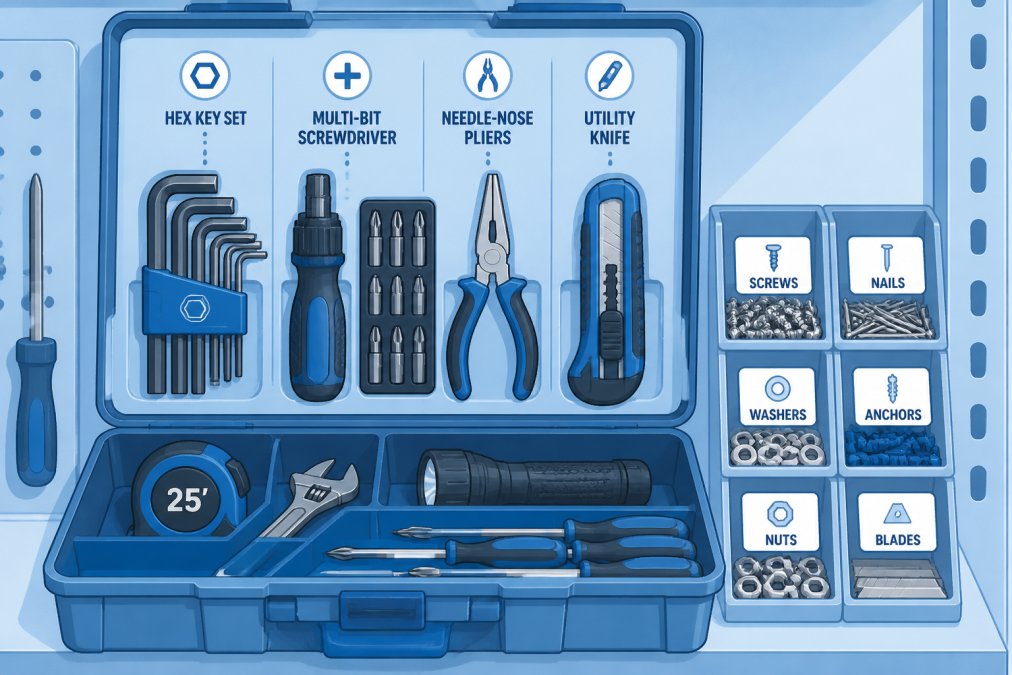
Practical organization by frequency:
- Top tray or top drawer: tape measure, multi-bit screwdriver, utility knife, flashlight
- Middle section: hammer, pliers set, adjustable wrench
- Bottom or separate bag: handsaw, torpedo level, hex key set, specialty tools
- Small bins or magnetic strips: fasteners, spare blades, batteries
Label small bins. It sounds unnecessary until you're looking for a specific bolt size at 9 PM.
Storage Solutions for Small Spaces
Small-space tool storage works best when it goes vertical. A wall-mounted pegboard with hooks and holders keeps tools visible and accessible without consuming floor space. A 24 x 48-inch pegboard holds a complete home repair kit and fits in a closet or utility room.
For apartment dwellers or renters without wall access, a rolling tool cart with shallow drawers is the next best option. Shallow drawers keep tools visible without stacking. The one rule that applies in any space: every tool has one home, and it goes back there after every use.
Tool Maintenance and Care: Making Your Hand Tools Last
Quality hand tools last decades with minimal maintenance.
Cleaning: Wipe metal surfaces with a clean rag after use, particularly after contact with damp materials or treated lumber. For pliers and wrenches with moving pivot points, a drop of machine oil on the joint every few months keeps the action smooth.
Rust prevention: Light surface rust doesn't ruin a hand tool. Remove it with fine steel wool and apply a thin coat of oil. Prevent deeper rust by keeping tools dry and storing them in a low-humidity environment.
Handle inspection: Check wooden and rubberized handles for cracks, splits, or separation from the tool head. A loose hammer head is a safety issue. Replace or repair before the next use.
Blade replacement: Utility knife blades dull faster than most people expect. A dull blade requires more force to cut, which increases the risk of slipping. Swap blades proactively rather than waiting until the blade stops cutting cleanly.
Verdict: Which Hand Tools for Home Repairs Should You Buy First?
The best hand tools for home repairs, if you're building from zero, follow a clear priority order.
Buy first (covers 80% of home repairs):
- Multi-bit screwdriver, Klein Tools 11-in-1
- Claw hammer, Estwing E3-16S
- Tape measure, STANLEY FATMAX 25-foot
- Utility knife, Milwaukee FASTBACK
- Slip-joint pliers
Buy second (expands to 95% of home repairs): 6. Adjustable wrench (10-inch) 7. Needle-nose pliers 8. Tongue and groove pliers, CHANNELLOCK 440 9. Torpedo level 10. Handsaw
Buy third (completes the kit): 11. Hex key set / Allen wrench set 12. Flashlight or headlamp
This sequence means your first purchase covers the repairs you're most likely to face this week. The second tier handles plumbing and more complex fastening work. The third tier fills the gaps that come up occasionally.
The right place to source these tools matters too. Tools, Handbags, and More carries a broad range of hand tools and hardware, and the custom sourcing service means that if a specific tool or kit isn't currently in stock, the team will actively work to find it, rather than simply telling you it's unavailable.
Building a solid home repair kit is a one-time investment that pays off across years of maintenance, projects, and emergencies. The tools covered in this guide represent the best hand tools for home repairs at each category, selected for durability, ergonomics, and genuine usefulness rather than marketing claims.
At Tools, Handbags, and More, finding the right tool for your specific situation is what the custom sourcing service is built for. Browse the current inventory or reach out directly to get personalized help locating any item on your list.
Frequently Asked Questions
What hand tools should every homeowner have for basic home repairs?
A solid starter set for hand tools home repairs includes a 25-foot tape measure, a 16 oz. claw hammer, a multi-bit screwdriver, an adjustable wrench, slip-joint pliers, needle-nose pliers, a utility knife, a torpedo level, and a hex key set. These cover the vast majority of home maintenance tasks, from hanging pictures and tightening fasteners to cutting materials and checking that shelves are level.
How do I build an essential home repair tool kit on a budget?
Start with five core tools: a claw hammer, a multi-bit screwdriver, an adjustable wrench, a tape measure, and a utility knife. These handle most basic tasks. Add needle-nose pliers and a torpedo level next. Budget-grade versions from reputable brands work fine for occasional DIY use. Upgrade to professional-grade tools only when you find yourself using a specific tool frequently enough that durability and ergonomic grip become priorities.
What are the most important DIY home repair safety tips?
Always wear safety glasses when cutting, drilling, or driving fasteners, debris travels fast. Use work gloves when handling sharp edges or rough materials. Keep your work area well-lit; a flashlight or headlamp prevents misjudged cuts. Store sharp tools like utility knives with the blade retracted. Never use a tool for a task it wasn't designed for, and inspect tools for damage before each use. OSHA guidelines reinforce these basics for good reason.
How should I organize a home tool box when space is limited?
Group tools by function: fastening tools together, measuring tools together, cutting tools together. Use a roll-up pouch for wrenches and a small labeled bin for fasteners like screws and bolts. Magnetic strips mounted on a wall or inside a cabinet door hold metal tools without taking up drawer space. A compact, stackable toolbox system works better than a single large chest when floor space is tight.
How do I maintain hand tools so they last longer?
Wipe metal surfaces dry after use to prevent rust, especially on saw blades and wrench jaws. Apply a light coat of machine oil to hinged tools like pliers every few months. Replace utility knife blades before they become dull, a sharp blade requires less force and causes fewer slips. Store tools in a dry location; moisture is the fastest way to degrade both metal components and ergonomic grip handles.
This article was written using GrandRanker