

Best Hobbyist Drones for Beginners: Top Picks 2026
Table of Contents
- Best Hobbyist Drones for Beginners: Quick Comparison
- How to Choose a Beginner Drone
- 1. DJI Mini 4 Pro: Best for Camera Quality
- 2. Ryze Tello: Best Entry-Level Pick
- 3. Holy Stone HS110D: Best Budget Option
- 4. Potensic Atom SE: Best Portable 4K Drone
- 5. Ruko F11 Mini: Best GPS Features
- 6. DEERC D20 Mini Drone: Best for Kids
Last Updated: August 20, 2026
Best Hobbyist Drones for Beginners: Quick Comparison
Flying a drone for the first time can feel intimidating, but modern flight stabilization, obstacle avoidance, and autonomous return-to-home features handle most of the complexity for you. The challenge isn't finding a drone, it's finding the right one for your skill level, budget, and intended use.
At Tools, Handbags, and More, we understand that choosing your first drone involves more than picking the cheapest option. You need something reliable, forgiving of mistakes, and practical for how you'll actually fly. Below, we've analyzed the top options across different use cases, budgets, and experience levels.
| Drone | Best For | Key Strength | Flight Time | Starting Price |
|---|---|---|---|---|
| DJI Mini 4 Pro | Camera quality & advanced features | 4K/60fps HDR video, omnidirectional obstacle avoidance | 34 minutes | $759 |
| Ryze Tello | Entry-level & programming | Throw & Go simplicity, Scratch coding support | 13 minutes | $99 |
| Holy Stone HS110D | Budget learning | Affordable with dual batteries, Headless Mode | 20 minutes total | $169.99 |
| Potensic Atom SE | Portable 4K on a budget | 4K camera + GPS, lightweight foldable design | 62 minutes | $299.99 |
| Ruko F11 Mini | GPS features & stability | Brushless motors, intelligent flight modes | 30 minutes | $275.99 |
| DEERC D20 Mini | Kids & absolute beginners | Extremely affordable, durable, simple controls | 20 minutes total | $49.99 |
How to Choose a Beginner Drone
Picking your first drone comes down to three core questions: What will you use it for? How much are you willing to spend? How comfortable are you learning a new skill?
Your intended use case matters most. If you want aerial photos and videos, you need a decent camera and gimbal stabilization. If you're learning purely for piloting enjoyment, you can skip the expensive camera. For kids or indoor practice, a smaller, durable quadcopter works best. For outdoor flights in open areas, GPS positioning and longer flight times are essential.
Budget ranges from under $50 to over $750. A $50 drone teaches basic controls but won't deliver smooth video or survive many crashes. A $300 drone balances performance and affordability. A $700+ drone offers professional-grade video and advanced autonomous features that make piloting easier.
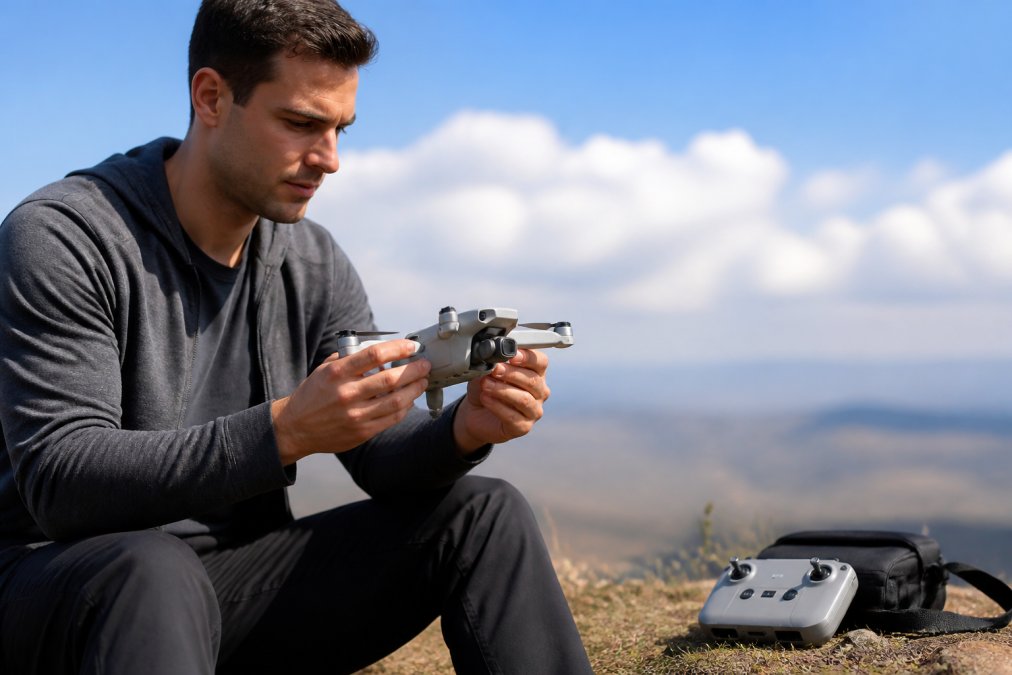
True beginners benefit from altitude hold, which keeps the drone hovering without constant stick input. Headless mode removes directional confusion. Return-to-home automatically brings the drone back when battery runs low or signal is lost.
Key Features to Look For
Flight stabilization and control. A quality flight controller manages gyroscopes and accelerometers to keep the aircraft stable. Look for 6-axis gyro systems. Altitude hold is essential for beginners.
Camera and gimbal quality. A mechanical gimbal produces much smoother video than electronic stabilization alone. A 1-inch sensor captures far more light than a 1/2-inch sensor, producing cleaner footage in dim conditions.
Flight time and battery management. Most beginner drones fly 13-30 minutes per battery. Drones with two batteries effectively double your flight session. Store batteries at 40-60% charge between flights to maximize lifespan.
Portability and weight. Drones under 249 grams avoid FAA registration requirements. Foldable designs pack into backpacks.
Transmission range and latency. Most beginner drones offer 1-3 miles of range, sufficient for learning. Lower latency makes first-person view flying more responsive.
Budget-Friendly vs. Premium Options
Budget drones under $200 teach fundamentals without financial risk. Mid-range drones ($250-$400) offer the best value: 4K cameras, GPS positioning, foldable designs, and 20-30 minute flight times. Premium drones ($600+) add professional-grade video and advanced obstacle avoidance.
1. DJI Mini 4 Pro: Best for Camera Quality
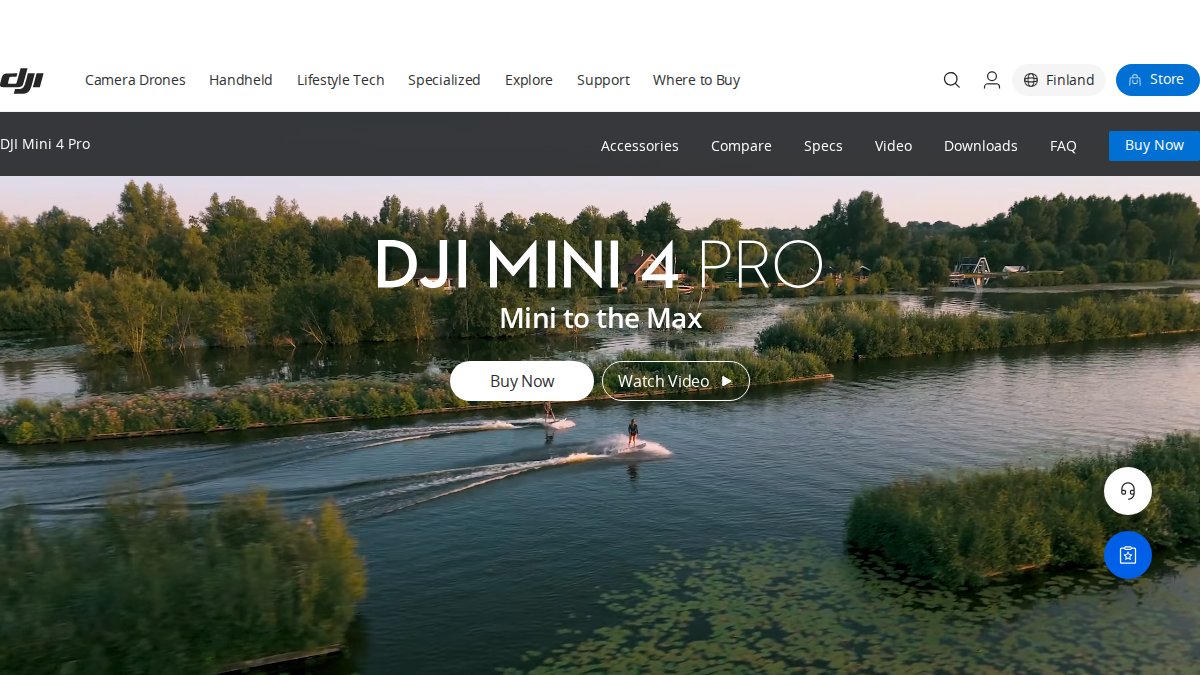
The DJI Mini 4 Pro delivers 4K video at 60fps with 10-bit D-Log M color grading for professional-grade editing. Omnidirectional obstacle avoidance detects hazards in all directions. At under 249 grams, it avoids FAA registration requirements.
The flight controller hovers precisely and responds smoothly to stick input. ActiveTrack 360° with Trace Mode lets you program the drone to follow a subject automatically. Flight time reaches 34 minutes, and OcuSync 4 transmission maintains a reliable video feed up to 12.4 miles away.
What works: Professional-grade camera and video stabilization. Comprehensive obstacle avoidance. Intelligent battery management.
What doesn't: The $759 price is steep for testing interest. Some advanced features might confuse absolute beginners initially.
2. Ryze Tello: Best Entry-Level Pick
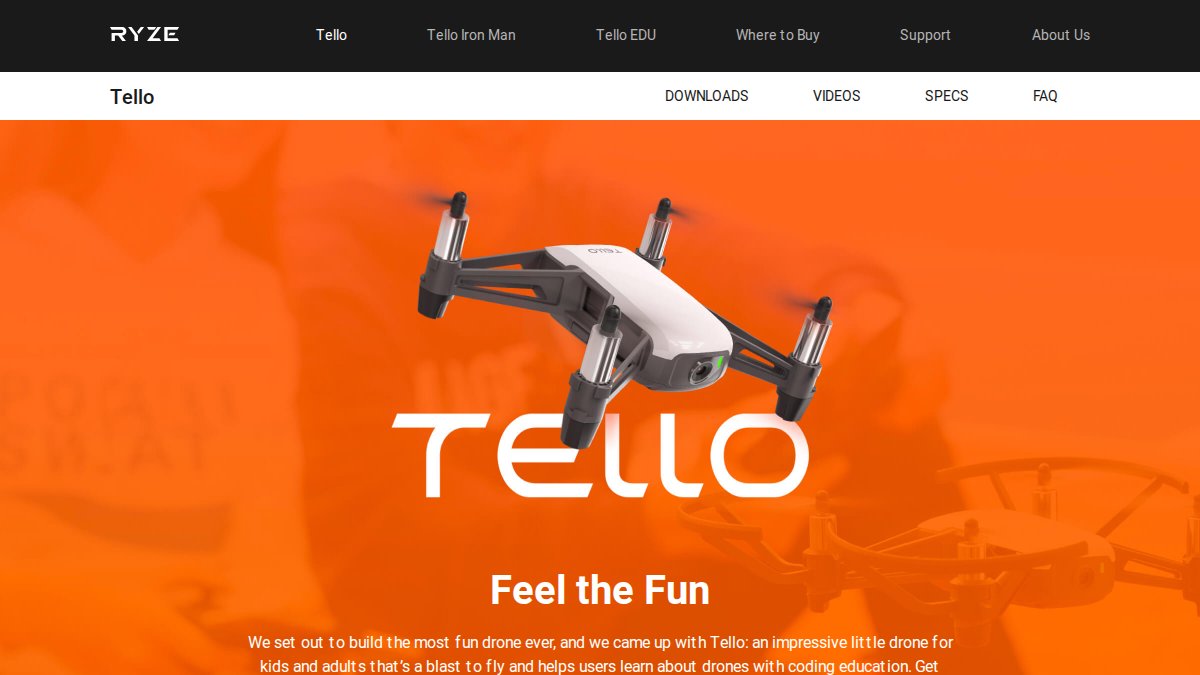
The Ryze Tello is built on DJI flight technology and remarkably stable for its size and price. Throw & Go means you toss it into the air and it takes off, ideal for indoor practice. The 720p camera is basic but functional. Where Tello stands out is programmability: code flight sequences using Scratch, a visual programming language.
Bounce Mode and 8D Flips let you practice acrobatic maneuvers safely. Intel Movidius vision processing keeps the drone stable without GPS, working indoors and in poor satellite coverage areas.
What works: Extremely easy to fly. Educational value through Scratch programming is unique at this price. Durable enough to survive crashes. At $99, genuinely accessible.
What doesn't: Limited flight time (13 minutes). No GPS makes outdoor flight less stable in wind. Basic camera.
3. Holy Stone HS110D: Best Budget Option
The Holy Stone HS110D at $169.99 includes two batteries (doubling flight time), a 1080P HD camera with 120° wide-angle lens, and enough features for months of learning. Altitude Hold keeps the drone hovering at fixed height. Headless Mode removes directional confusion, the drone moves relative to your perspective, not its own orientation.
Voice control and gesture control add engagement without complexity. The camera feed streams live to your phone via Wi-Fi, giving first-person view of what the drone sees.
What works: Two batteries included mean roughly 20 minutes total flight time per session. Budget-friendly price. Altitude Hold and Headless Mode make early flights forgiving. Propeller guards reduce injury risk.
What doesn't: No video stabilization, footage is shaky without a mechanical gimbal. Wi-Fi transmission range is limited. Build quality is adequate but not durable against repeated hard crashes.
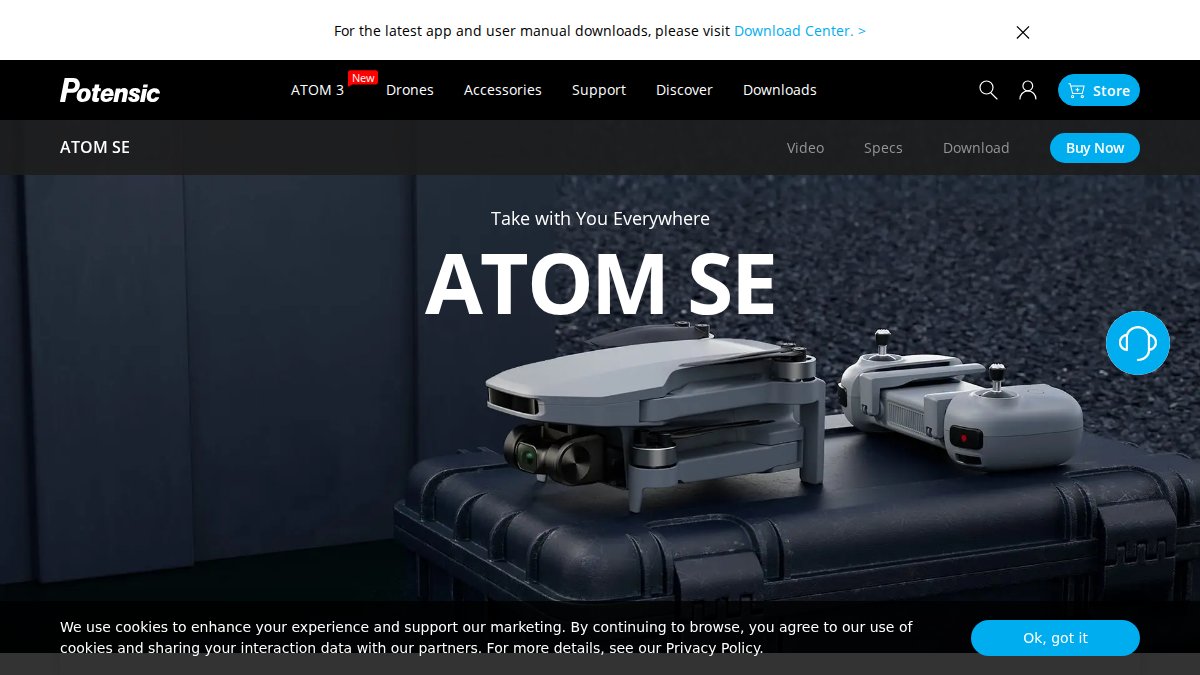
4. Potensic Atom SE: Best Portable 4K Drone
The Potensic Atom SE at $299.99 gets you a 4K camera, GPS positioning, and foldable design that fits in a backpack. GPS-assisted flight modes include Return to Home and Follow Me. ShakeVanish electronic image stabilization smooths vibration, though not as effectively as a mechanical gimbal.
Flight time reaches 62 minutes with two batteries included. The 4K camera captures 3840x2160 resolution suitable for editing and social media.
What works: 4K video at this price is exceptional value. GPS features add stability and autonomous flight modes. Long flight time means extended practice sessions. Foldable design is genuinely portable.
What doesn't: Electronic stabilization can't match a mechanical gimbal. App interface has a learning curve. Wind stability is adequate but not exceptional.
5. Ruko F11 Mini: Best GPS Features
The Ruko F11 Mini at $275.99 prioritizes stability and intelligent flight modes. Brushless motors are more durable, efficient, and produce less vibration than brushed motors, translating to smoother video and longer flight times. GPS auto return is reliable; if signal is lost or battery runs low, the drone returns to its launch point automatically.
Follow Me mode tracks a moving subject, and Waypoints let you program a flight path that the drone executes autonomously. Flight time reaches 30 minutes per battery.
What works: Brushless motors are a quality differentiator. GPS features are reliable and useful. 4K camera quality is good for the price. Carry bag and accessories add practical value.
What doesn't: No mechanical gimbal means electronic stabilization only. App can be finicky. Wind stability is good but not exceptional.
6. DEERC D20 Mini Drone: Best for Kids
The DEERC D20 Mini at $49.99 is the entry point for children and absolute beginners. One Key Start/Landing handles takeoff and landing with a single button press. Altitude Hold keeps it hovering when you release the throttle. Headless Mode removes directional confusion. The 720P HD camera captures basic footage.
Durability is a strength. The lightweight design and included propeller guards mean crashes are rarely catastrophic. Two batteries provide roughly 20 minutes total flight time. The drone works indoors and in calm outdoor conditions.
What works: Extremely affordable and risk-free for testing interest. Very easy to fly with simplified controls. Durable construction survives crashes. Two batteries included.
What doesn't: Basic camera quality and no stabilization. High wind sensitivity due to lightweight construction. Limited control range.
Drone Flight Safety and Regulatory Compliance
The Federal Aviation Administration (FAA) regulates recreational drone flight in the United States. Core rules: keep your drone in visual line of sight, maintain altitude below 400 feet, avoid flying near airports, and never fly over people or moving vehicles.
Drones under 249 grams are exempt from FAA registration, but you must follow all operational rules. Drones 249 grams and above require registration before flight. Registration costs $5 and is valid for three years through the FAA's UAS registration system.
Before flying, check local airspace restrictions using the FAA's B4UFLY app or AirMap, which show no-fly zones and airspace classifications.
Always fly in open areas away from buildings, trees, and power lines. Never aim the drone at people or animals. Keep spectators at least 30 feet away. Inspect propellers before each flight for cracks or damage. Store batteries in a fireproof container if possible. If a battery puffs up or shows damage, dispose of it properly at an electronics recycling facility.
Drone Maintenance and Battery Care
After each flight, inspect propellers, arms, and landing gear for damage. Spare propellers are inexpensive and essential. Clean the camera lens gently with a microfiber cloth.
Battery management is most important. Store batteries at 40-60% charge between flights. If you won't fly for more than a week, discharge the battery to storage level. Never leave a battery fully charged or fully discharged for extended periods.
Compass calibration improves flight stability. Most drones require calibration before first flight and periodically afterward. Firmware updates improve performance and fix bugs, check for updates through the drone's app before each session.
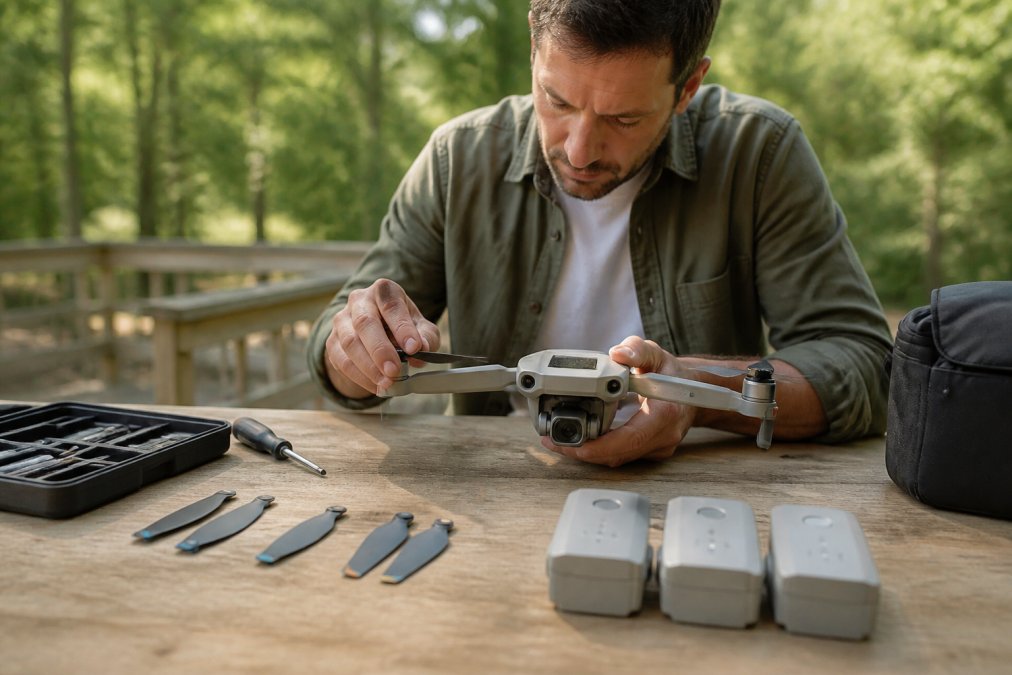
Store your drone in a cool, dry place. A protective carrying case with foam inserts keeps everything organized and protected during transport.
Frequently Asked Questions
Do I need an FAA license to fly a hobbyist drone?
No, recreational drone pilots do not need a Part 107 commercial license. However, you must register your drone with the FAA if it weighs more than 0.55 pounds. You also need to pass the FAA's TRUST test (The Recreational UAS Safety Test) before flying. Registration costs $5 and is valid for three years. The TRUST test is free and takes about 20 minutes to complete online.
What are the best beginner drones for aerial photography?
The DJI Mini 4 Pro offers professional 4K video in a lightweight package under 249 grams, making it ideal for photography enthusiasts. The Potensic Atom SE provides excellent value with 4K capability and GPS features. For absolute beginners on a tight budget, the Holy Stone HS110D delivers 1080P video at an affordable price. Each offers different balances of camera quality, flight time, and ease of use depending on your priorities.
How much should I spend on my first hobbyist drone?
Budget options like the DEERC D20 ($49.99) and Ryze Tello ($99) are excellent for learning basics. Mid-range drones ($130-$300) like the Altair Aerial AA108, Holy Stone HS110D, and Potensic Atom SE offer better cameras and features. Premium beginner drones like the DJI Mini 4 Pro ($759) provide professional-grade video and obstacle avoidance. Start with your budget and intended use: casual flying and learning favor budget models, while aerial photography justifies higher investment.
What features make a drone beginner-friendly?
Look for altitude hold to keep the drone stable without constant input, headless mode so orientation doesn't matter, one-button takeoff and landing, and propeller guards for crash protection. GPS positioning and return-to-home features add safety. Flight stabilization through a gimbal or electronic image stabilization improves video quality. Obstacle avoidance systems like those on the DJI Mini 4 Pro help prevent crashes. Beginners also benefit from durable construction that survives learning crashes without breaking.
Are cheap drones worth buying to learn on?
Yes, budget drones are excellent for learning fundamentals. Models like the Syma X5C ($40-$50) and DEERC D20 ($49.99) teach basic flight controls, and their durability means crashes during practice won't devastate your wallet. However, very cheap models lack stabilization, so video quality suffers. If you plan to progress to aerial photography, investing in a mid-range drone with a gimbal ($200-$300) or better camera saves money long-term by avoiding the need to upgrade quickly.
This article was written using GrandRanker