

Best Online One Stop Shops 2026
Table of Contents
- What Makes the Best Online One Stop Shops in 2026
- The Benefits of One-Stop Online Shopping
- Top Online One Stop Shops Reviewed for 2026
- How to Compare Online Retailer Shipping Policies
- Sustainability and Ethical Sourcing: What to Look For
- Online Shopping Safety Tips Every Buyer Should Know
- Which One Stop Shop Is Right for You?
- Conclusion
Last Updated: August 12, 2026
What Makes the Best Online One Stop Shops in 2026
A one-stop shop is a single retail destination where consumers can purchase goods across multiple unrelated categories without switching platforms, accounts, or checkout flows. The appeal is straightforward: fewer tabs open, one shipping timeline to track, and a single return policy to understand.
Most large platforms win on volume but lose on personalization. The custom sourcing gap is where the best one stop shops in 2026 are actually competing.
Quick Picks:
- Best for Custom Sourcing: Tools, Handbags, and More, personalized assistance for items not in stock
- Best for Pure Volume: Large marketplace platforms, millions of SKUs, fast fulfillment
- Best for Unique Finds: Specialty and niche retailers, depth over breadth
The Benefits of One-Stop Online Shopping
One-stop online shopping reduces decision fatigue and simplifies the customer journey. According to the National Retail Federation's consumer research, convenience consistently ranks among the top three drivers of retailer loyalty, alongside price and product availability.
Time Savings and Cross-Category Convenience
A buyer who needs a cordless drill, a leather tote, and a Stanley tumbler in the same week faces three separate checkout flows, three shipping estimates, and three potential return processes if they shop across fragmented sites. A true one stop shop compresses that into one transaction.
Centralized procurement also eliminates the cognitive cost of managing multiple retailer relationships, password resets, scattered loyalty points, and inconsistent return windows add up.
Subscription vs. One-Off Purchase Models
Subscription models bundle free shipping, early access to sales, and exclusive pricing. One-off purchase models suit buyers with irregular or category-specific needs. The smarter approach: use subscription platforms for high-frequency commodity purchases and one-off platforms for specialized, low-frequency, or custom-sourced items.
Top Online One Stop Shops Reviewed for 2026
The platforms reviewed here represent different points on the breadth-versus-depth spectrum. The right one depends on what you're buying, how often you're buying it, and how much personalization you need.
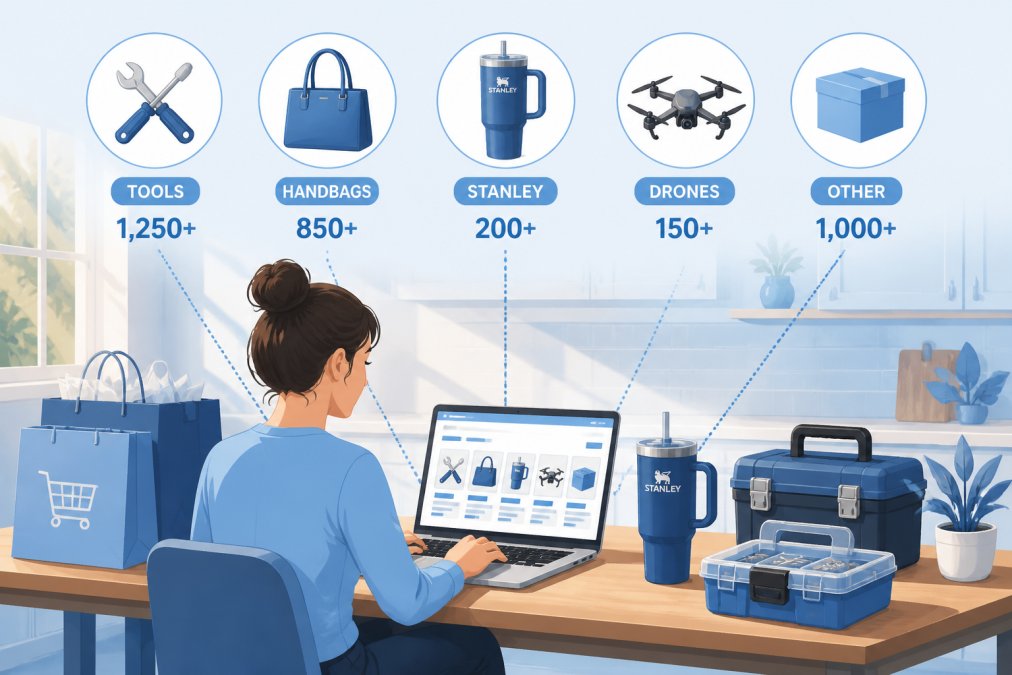
1. Tools, Handbags, and More: Best for Custom Sourcing
Tools, Handbags, and More is the top pick for buyers who need something specific and aren't willing to spend hours searching across multiple platforms. The product range spans practical tools, stylish handbags, Stanley tumblers, drones, and household items. What sets it apart is the custom sourcing service: if an item isn't currently in stock, the team actively works to find it for you.
Most large marketplaces surface what's available and stop there. Tools, Handbags, and More treats "we don't have it right now" as a starting point, not a dead end.
What works: Cross-category range, custom sourcing for out-of-stock items, personalized customer service. What to know: For commodity items needed in 24 hours, a large marketplace may be faster. The value here is in sourcing capability and service, not raw speed.
2. Large Marketplace Platforms: Breadth Over Depth
Large marketplace platforms dominate on pure inventory volume, competitive pricing, and logistics infrastructure supporting two-day or same-day delivery in most metro areas. For buyers who know exactly what they want and need it fast, these platforms are hard to argue against.
Product authenticity can vary when buying from third-party sellers. Review manipulation remains an ongoing issue.
Best for: High-frequency commodity purchases, buyers prioritizing delivery speed, and cross-category shopping where brand specificity matters less than price.
The honest limitation: When you need something specific, niche, or currently out of stock, there's no sourcing assistance or personalization.
3. Specialty and Niche Retailers: When Category Depth Matters
Specialty retailers serve buyers who need depth over breadth. A home furnishing buyer needs thousands of furniture SKUs with detailed filtering by style, dimension, and material. A pet owner managing a chronic condition needs veterinary-grade product selection and 24/7 support.
Specialty retailers offer advanced search, 3D product views, and fulfillment networks built for specific categories. The trade-off is managing multiple retailer relationships if your needs span categories.
Best for: Single-category deep dives where product selection quality matters more than cross-category convenience.
| Retailer Type | Breadth | Depth | Custom Sourcing | Best For |
|---|---|---|---|---|
| Tools, Handbags, and More | High | High | Yes | Specific items, custom finds |
| Large marketplace | Very high | Moderate | No | Volume, speed, price |
| Specialty/niche | Low | Very high | Varies | Single-category expertise |
| Handmade/vintage marketplace | Moderate | High (unique) | Seller-dependent | One-of-a-kind items |
How to Compare Online Retailer Shipping Policies
Shipping policies reveal a retailer's actual operational commitments. A retailer's return rate, customer satisfaction, and repeat purchase behavior are downstream of how well they handle fulfillment.
Key Shipping Terms to Evaluate Before You Buy
Evaluate these specific terms before placing an order:
- Free shipping threshold: What minimum order value triggers free shipping? A $35 threshold on a $28 purchase effectively adds cost.
- Estimated delivery window vs. guaranteed delivery: Some retailers offer guaranteed delivery dates with compensation if missed.
- Shipping carrier options: Multi-carrier flexibility handles disruptions better than single-carrier dependency.
- Last-mile delivery for large items: Furniture and heavy tools require white-glove or threshold delivery options.
- Return shipping cost: Some retailers charge return shipping or require in-store drop-off.
According to the Consumer Financial Protection Bureau's guidance on online purchases, buyers have specific rights regarding disputed charges and undelivered goods.
Sustainability and Ethical Sourcing: What to Look For
Sustainability has moved from a marketing differentiator to a genuine purchase criterion. The challenge is that sustainability claims are easy to make and difficult to verify without third-party certification.
The most credible signals are third-party certifications, supply chain transparency reports, and clear policies on materials and labor standards. Vague language without supporting documentation is a red flag.
For buyers prioritizing sustainability, the Federal Trade Commission's Green Guides for environmental marketing claims provide a framework for evaluating retailer claims.
Practical things to look for:
- Packaging: Does the retailer use minimal, recyclable, or compostable packaging?
- Product sourcing: For tools, are materials responsibly sourced? For fashion, is there disclosure on manufacturing location and labor standards?
- Carbon offset programs: Look for third-party verification, not just self-reporting.
- Return and resale programs: Retailers that resell or donate returned items demonstrate genuine commitment to reducing waste.
Auto-ship programs consolidate deliveries into fewer, larger shipments, reducing per-unit packaging and last-mile delivery emissions compared to frequent small orders.
Online Shopping Safety Tips Every Buyer Should Know
Online shopping safety is a practical concern. The volume of fraudulent listings, counterfeit goods, and phishing attempts targeting online shoppers increases every year.
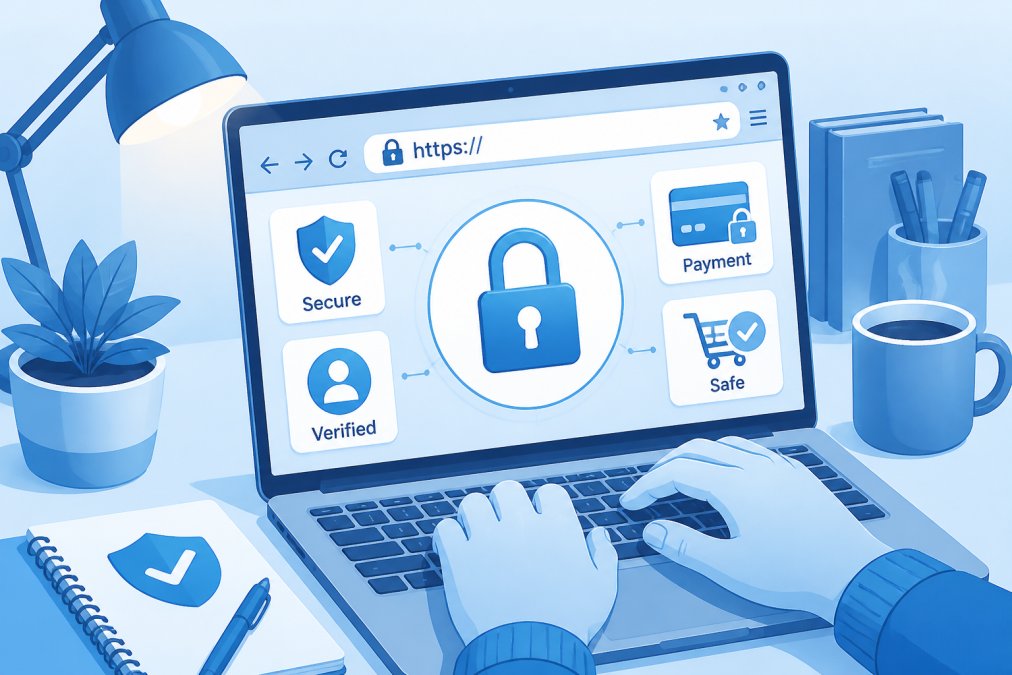
Verify the retailer's legitimacy before entering payment information. A legitimate e-commerce site will have HTTPS in the address bar, a verifiable physical address or contact method, and a clear return and privacy policy.
Core online shopping safety tips:
- Check for HTTPS and a valid SSL certificate before entering any payment details
- Use a credit card rather than a debit card; credit cards offer stronger dispute resolution under federal law
- Read the return policy before purchasing
- For custom-sourced items, confirm the sourcing process and expected timeline in writing before payment
- Avoid saving payment information on unfamiliar sites
- Use unique passwords for retail accounts
- Check seller reviews and ratings, particularly for marketplace platforms
The Federal Trade Commission provides guidance on avoiding online shopping scams, including how to report fraudulent sellers and dispute undelivered purchases.
For custom sourcing arrangements, confirm the item description, expected delivery window, and return terms in writing before payment clears.
Which One Stop Shop Is Right for You?
The right choice depends on three variables: what you're buying, how often you buy it, and how much service you need when the standard catalog falls short.
Use this framework:
| Buyer Profile | Best Match | Why |
|---|---|---|
| Needs specific or hard-to-find items | Tools, Handbags, and More | Custom sourcing service, personalized assistance |
| High-frequency commodity shopper | Large marketplace with membership | Volume pricing, fast fulfillment |
| Single-category deep buyer | Specialty retailer | Category depth, specialized features |
| Unique/handmade item hunter | Handmade/vintage marketplace | Artisan inventory, direct seller contact |
| Pet owner with recurring needs | Pet-focused specialty retailer | Auto-ship, veterinary integration |
Buyers who get the most value from Tools, Handbags, and More are those who've experienced the frustration of large marketplace browsing: you know what you want, it's not surfaced by the algorithm, and there's no one to ask. The custom sourcing model solves that problem directly.
For buyers whose needs are purely commodity, high-frequency, and price-sensitive, a large marketplace with a membership tier is the rational choice. Many buyers use a large platform for weekly essentials and a specialized retailer for anything requiring actual sourcing effort.
Frequently Asked Questions
What is the most trusted type of online one stop shop for general goods?
The most trusted one stop shops combine a broad, diversified product range with transparent return policies, secure checkout, and responsive customer service. Platforms that clearly disclose seller information and offer buyer protection programs tend to earn higher consumer satisfaction. For specialized or hard-to-find items, shops offering custom sourcing services add an extra layer of reliability because a real person actively tracks down what you need rather than leaving you to search alone.
What are the benefits of using a one-stop shop versus niche retailers?
Shopping from a single destination saves time and reduces the friction of managing multiple accounts, shipping timelines, and return policies. One stop shops simplify the customer journey by consolidating cross-category shopping into one seamless checkout. You also reduce last-mile delivery complexity since fewer separate packages arrive at different times. For families or hobbyists who regularly buy across categories like tools, accessories, and household essentials, the efficiency gain is significant compared to bouncing between niche retailers.
How do I identify a reliable one-stop online shop?
Check for clear shipping and return policies before purchasing. Look for secure checkout indicated by HTTPS in the browser address bar. Read customer reviews across multiple sources, not just on the retailer's own site. Confirm the shop has a reachable customer service channel. For custom or hard-to-source items, ask upfront about the sourcing process and expected timelines. Shops that answer these questions directly and honestly are generally the more trustworthy options.
Which online stores offer the best shipping and return policies in 2026?
Shipping and return policies vary widely. Large marketplace platforms often offer expedited shipping through membership programs, while specialty retailers may have longer lead times but more flexible return windows for niche products. When comparing, focus on: whether return shipping is free, how long you have to initiate a return, and whether refunds are issued as store credit or back to your original payment method. Always read the fine print before completing a purchase, especially for custom-sourced or made-to-order items.
Are subscription memberships worth it for one-stop online shopping?
Subscription memberships make sense if you shop frequently enough to offset the annual or monthly fee through shipping savings and member discounts. Many major platforms offer memberships that include free expedited shipping, early access to sales, and streaming perks. If you shop sporadically or only in one category, a pay-as-you-go model may be more cost-effective. Calculate your average monthly spend and compare it against the membership cost to decide whether the transactional efficiency gains justify the fee.
Finding the right one stop shop comes down to knowing where your needs fall on the spectrum from commodity to custom. For buyers who need personalized sourcing assistance across tools, accessories, and specialty items, Tools, Handbags, and More offers a service model that large marketplaces don't replicate. Explore the full catalog and custom sourcing service at toolshandbagsandmore.com, and get started with Tools, Handbags, and More to find exactly what you're looking for.
This article was written using GrandRanker