

Custom Sourcing Service for Hobbyists: A 2026 Guide
Table of Contents
- Custom Sourcing Service for Hobbyists: What It Is and Why It Matters
- Custom Product Sourcing: From Design Brief to Finished Item
- Finding Hard-to-Find Hobby Supplies Without the Runaround
- The Custom Sourcing Request Template That Gets Results
- Product Sourcing Turnaround Time: What to Expect and Why It Varies
- Samples, Prototypes, and Quality Control: Getting It Right Before You Commit
- Budgeting for Custom Sourcing: Unit Cost, Tooling, Shipping, and Duties
- Frequently Asked Questions
Last Updated: October 12, 2026
Custom Sourcing Service for Hobbyists: What It Is and Why It Matters
A custom sourcing service for hobbyists tracks down specific items a shopper cannot find in stock, then handles the purchase and delivery.
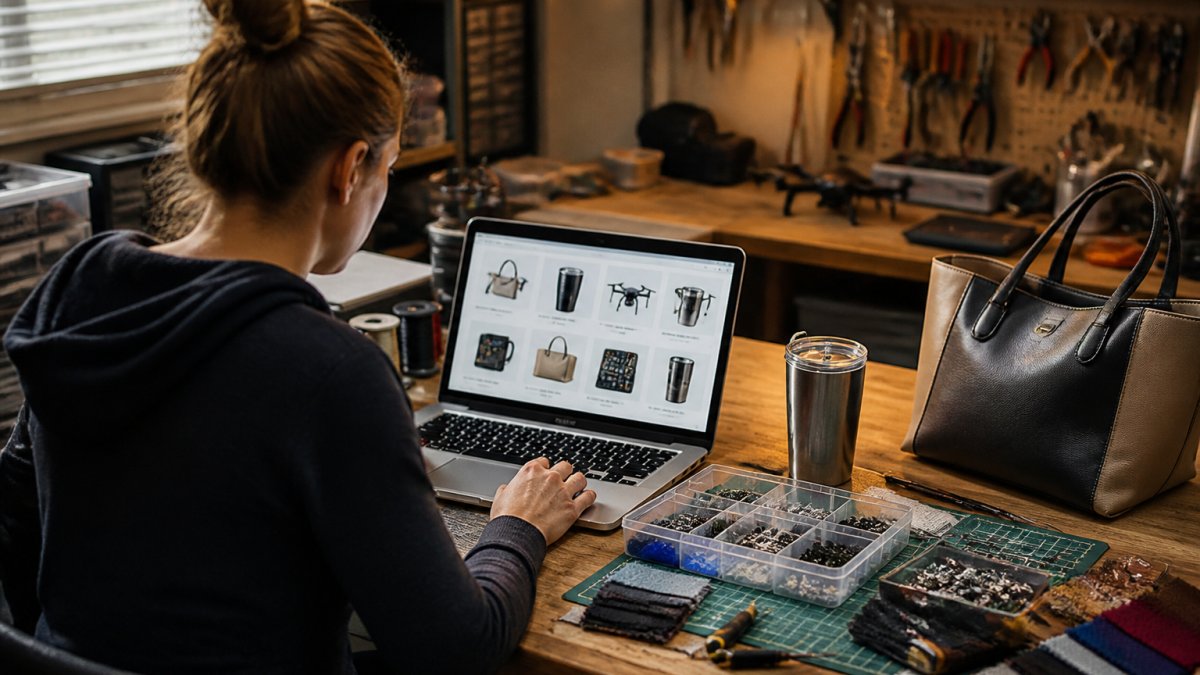
A standard retailer sells what sits on its shelves. A custom sourcing service starts with what you need and works backward: you describe the item, we locate it, confirm the details, and arrange delivery.
That difference matters most when a project stalls on one missing component. The Federal Trade Commission's guidance on mail, internet, and telephone order merchandise is clear that sellers must ship within the time promised or offer a refund, which is exactly the accountability you want behind any sourcing request.
How Custom Sourcing Differs from Regular Online Shopping
Regular online shopping rewards you for buying what already exists in a catalog. Custom sourcing rewards you for describing what you want.
The practical difference shows up in four places:
- Selection: a catalog is fixed; a sourcing request is open-ended
- Communication: checkout is silent; sourcing involves a real person confirming specs
- Availability: stock is whatever is listed; sourcing hunts down what is not
This is why hobbyists use a custom sourcing service for hard-to-find hobby supplies rather than refreshing a product page and hoping.
Custom Product Sourcing: From Design Brief to Finished Item
Custom product sourcing turns a written description into a delivered item through a design brief, supplier search, sample review, and final order. The clearer your brief, the faster the chain moves.
Working with Suppliers, Factories, and Manufacturers
Most hobbyist requests do not need a factory, just a supplier who stocks the part or a small manufacturer who can run a short batch.
Here is how the three tiers usually break down:
| Source Type | Best For | Typical Volume | Watch Out For |
|---|---|---|---|
| Retail supplier | Single items, brand-name tools | 1-5 units | Limited stock depth |
| Distributor | Bulk consumables, blades, bits | 10-100 units | Minimum order rules |
| Small manufacturer | Custom parts, short runs | 50+ units | Tooling setup cost |
A common mistake is assuming a manufacturer is always cheaper. For one or two units, a distributor or retail supplier wins once you factor in setup.
Low-Volume Sourcing and Minimum Order Quantities
The biggest friction point for hobbyists is the minimum order quantity, or MOQ. Many factories quote MOQs in the hundreds or thousands because setup time is fixed regardless of run size. Small orders are still possible, you just have to shop differently.
A practical pattern that works for one-off and small-batch requests:
- Ask for a sample order first. Many suppliers will sell one or two units as a paid sample even when the listed MOQ is higher. Frame it as a sample, not a production run.
- Look for distributors and job shops, not factories. Distributors buy in bulk and resell in small quantities. Job shops and maker spaces often take short runs that factories reject.
- Combine orders. If you and a few friends in the same hobby need the same part, a combined order of 20-50 units can cross a distributor's threshold and lower the per-unit price.
If a supplier will not budge on MOQ, ask for a referral to a reseller who stocks their parts, often faster than negotiating.
Verifying a Supplier Before You Send Money
Supplier verification is the step most hobbyists skip, and where money gets lost. A short checklist catches most problems:
- Confirm the business has a verifiable address and phone number, not just a chat handle
- Ask for two or three references from past buyers in a similar category
- Request a sample and pay through a method that offers buyer protection
A supplier who cannot provide a clear sample or answer basic spec questions is a risk, no matter the price. For imports, confirm they can provide a commercial invoice and packing list in case the shipment is held at customs.
Protecting Your Design Files and Intellectual Property
Sharing a drawing, CAD file, or prototype photo hands over your design. A few low-cost habits reduce the risk:
- Share only the files needed for the quote, not your full design package
- Mark drawings with your name, date, and a confidentiality note
- Ask the supplier to confirm in writing that they will not resell or share your design
The United States Patent and Trademark Office's guidance on provisional applications explains how a provisional filing can establish an early effective filing date while you test the market. For most hobby projects, a written confidentiality note and limited file sharing are enough; formal protection matters more once a design has commercial potential.
Finding Hard-to-Find Hobby Supplies Without the Runaround
Hard-to-find hobby supplies usually fall into four categories: discontinued items, region-specific products, low-demand specialty parts, and one-off custom pieces.
Region-specific products are easier.
Low-demand specialty parts sit in the middle: they exist, but few sellers list them prominently.
One-off custom pieces require a maker, not a search, where custom fabrication enters and a sourcing request saves the most time.
What most guides miss is that the search itself is the expensive part.
The Custom Sourcing Request Template That Gets Results
A custom sourcing request template is a short, structured message that gives a supplier everything needed to quote and locate your item in one pass. Vague requests get vague answers.
Ryobi FVD50K USB Lithium Screwdriver Kit 4V Li-Ion Battery Green/Black T-215 →
Use this template:
Item: [exact name or closest description] Quantity: [how many you need] Specifications: [size, voltage, material, color, model number] Compatible with: [the tool, machine, or project it must fit] Budget range: [what you expect to spend per unit] Deadline: [when you need it by] Reference: [photo, link, or part number if you have one]
Fill every line you can. If you do not know a spec, say so rather than guessing.
What to Include: Specifications, Materials, and Quantities
Specifications do the heavy lifting: for tools, voltage, chuck size, and battery type; for textiles, fiber content, weight, and finish; for electronics, voltage, connector type, and board dimensions.
Materials matter when substitutes will not work. State a required alloy or fabric, and note if a close alternative is acceptable, it widens the search.
Quantities change the sourcing path: one unit points to a retail supplier, fifty to a distributor or small manufacturer. Being upfront about volume prevents wasted quotes.
Product Sourcing Turnaround Time: What to Expect and Why It Varies
Product sourcing turnaround time ranges from a few days for in-stock items to several weeks for custom or imported goods. The biggest variable is whether the item already exists somewhere.
Four factors drive the timeline:
- Availability: in-stock items move fast; discontinued items take longer
- Customization: custom work adds design and production time
- Shipping distance: closer sources arrive sooner
For in-stock requests, expect quick confirmation and a short shipping window. For custom parts, plan on a sample stage before the full order, rushing it bakes in mistakes.
Samples, Prototypes, and Quality Control: Getting It Right Before You Commit
Sample approval protects your budget: before any full order, a sample or prototype lets you check fit, finish, and function against your brief.
Quality control comes next: for small orders, inspect the item on arrival against your specs; for larger runs, check a portion of the batch before the rest ships.
A practical inspection checklist:
- Confirm dimensions against your brief
- Check material and finish
- Test function or fit on your actual project
Budgeting for Custom Sourcing: Unit Cost, Tooling, Shipping, and Duties
Custom sourcing costs break into four buckets: unit cost, tooling, shipping, and import duties. Ignoring any one turns a good quote into a surprise, and most guides never show what a realistic total looks like.
The Four Cost Buckets, With Realistic Ranges
- Unit cost: the price per item. For a single hard-to-find part, expect to pay a premium over the original retail price, often 1.5x to 3x, because you are buying convenience and scarcity, not volume.
- Tooling cost: one-time setup for custom parts, spread across your order. Simple tooling for a small plastic or metal part commonly runs from a few hundred dollars into the low thousands. It only makes sense when you are ordering enough units to spread it out.
- Duties and taxes: applied on imported goods, based on value and category. The U.S. Customs and Border Protection's guidance on importing personal shipments explains that most personal imports under a certain value threshold enter duty-free, but the threshold and category rules change, so confirm before you commit.
A Worked Example for a Single Hobbyist Order
Suppose you need one discontinued gear for a vintage sewing machine. A realistic breakdown might look like this:
| Line Item | Typical Range |
|---|---|
| Unit cost (1 gear) | $15-$40 |
| Domestic shipping | $5-$12 |
| Sourcing or handling fee | $10-$30 |
| Import duty (if overseas) | $0-$8 |
| Estimated total | $30-$90 |
That total is the number to compare against the cost of buying a replacement machine or fabricating the part yourself. For a one-off, the sourcing fee is often the largest single line, which is why bundling several hard-to-find items into one request lowers your effective cost per item.
Contingency and Hidden Costs
Budget a 10-20% contingency on top of the quote. Common hidden costs:
- Re-shipping if the first item does not match the sample
- Currency conversion fees on international payments
- Storage or demurrage if a shipment sits at a port
For low-volume sourcing, a distributor or retail supplier keeps tooling at zero, usually the right call for one to five units. Tooling only pays off when setup cost divided by quantity beats the per-unit premium you would pay a distributor.
If you want a reliable tool in hand while a custom request is in progress, our Ryobi FVD50K USB Lithium Screwdriver Kit at $45.99 covers everyday assembly work, and the Ryobi TVM01 Rotary Tool Kit at $65.00 handles cutting, sanding, and polishing on small projects.


Frequently Asked Questions
What is a custom sourcing service?
A custom sourcing service helps you find and purchase items that are not listed in a store's regular catalog. You describe what you need, including specifications, materials, and quantity, and the service locates a supplier, factory, or manufacturer who can provide it. This is especially useful for hobbyists hunting hard-to-find hobby supplies, limited-edition collectibles, or custom parts that mainstream retailers do not carry.
Can a shop source a specific item that is not listed online?
Yes. That is the core purpose of custom sourcing. You submit a request with details like product type, dimensions, materials, and any reference photos. The sourcing team then contacts suppliers or manufacturers to locate or produce the item. For example, if you need a specific Ryobi router bit size or a discontinued jig saw blade, a custom sourcing request can track it down through supplier networks rather than limiting you to what is currently in stock.
How long does custom product sourcing usually take?
Product sourcing turnaround time depends on whether the item is in stock with a supplier or needs to be manufactured. In-stock items may ship within days, while custom fabrication or small-batch production can take several weeks. Factors include sample approval, quality control, and shipping logistics. Always ask for a timeline estimate upfront and confirm whether the quote includes duty-paid delivery.
Are custom-sourced products more expensive than buying in stock?
Not always. Custom sourcing can cost more when tooling, small-batch production, or international shipping is involved, but it can also save money by finding a supplier with a lower unit cost. Request a transparent breakdown covering unit cost, tooling cost, shipping, and import duties. For hobbyist applications, low-volume sourcing often means you pay a slight premium for flexibility, but you get exactly what you need instead of settling for a substitute.
The hardest part of any hobby project is the missing piece you cannot find anywhere. Tools, Handbags, and More exists to close that gap with a custom sourcing service built for one-off requests, backed by a catalog that includes tools, handbags, and collectibles in one place. Send us the details of what you need, and we will track it down, confirm the specs with you, and get it to your door. Get started with Tools, Handbags, and More and stop letting one missing part stall your project.