

Durable Everyday Carry Backpack Review: Top Picks for 2026
Table of Contents
- What Makes an Everyday Carry Backpack Durable?
- How to Organize an EDC Backpack for Daily Use
- Buy It for Life Backpack Brands: What to Look For
- Best EDC Backpack for Laptop and Commuting
- Top Durable Everyday Carry Backpack Picks from Tools, Handbags, and More
- How to Maintain and Repair Your EDC Backpack
- Frequently Asked Questions
Last Updated: September 16, 2026
What Makes an Everyday Carry Backpack Durable?
Durability in an everyday carry backpack comes down to three things: fabric weight and weave, hardware quality, and load distribution. A durable everyday carry backpack review has to look past the label and examine what happens after a year of daily use.
How to Organize an EDC Backpack for Daily Use
Learning how to organize an EDC backpack starts with grouping gear by how often you touch it, not by category. Quick-access pockets belong up top for phone, keys, and transit cards; a padded laptop sleeve sits against your back for weight distribution and protection. Separate cables, chargers, and small tools so nothing migrates to the bottom.
A simple three-zone system works for most people:
- Zone 1 (outer): phone, wallet, keys, transit pass
- Zone 2 (main): laptop, notebook, water bottle, daily tools
- Zone 3 (base): items you rarely touch, like a rain shell or backup charger
Buy It for Life Backpack Brands: What to Look For
Buy it for life backpack brands earn that label through repairability, not marketing. The brands worth your money publish replacement parts, honor repairs, and use standard hardware you can service yourself. A bag with a broken zipper that can't be fixed is landfill, no matter how tough the fabric was.
Prioritize these signals:
- Reinforced bar-tack stitching at strap anchors and handle joints
- Replaceable or serviceable zipper pulls
- Bluesign approved or PFAS-free materials, which signal a manufacturer thinking past the first owner
- A documented repair or warranty path
Best EDC Backpack for Laptop and Commuting
The best EDC backpack for laptop commuting protects your machine first and your shoulders second. A suspended laptop sleeve keeps the device off the bottom panel, preventing the cracked-corner damage that kills laptops in a drop. Padded shoulder straps and a breathable back panel handle the rest.
Laptop protection: measure the drop gap, don't trust the label
A "padded laptop sleeve" means nothing without a suspension system. Test it in the store:
- The push test. Slide your laptop into the sleeve and press down. If you can feel the bag's base panel, the sleeve is bottomed out and offers almost no drop protection. A true suspended sleeve leaves at least one inch of clearance.
- The corner test. Squeeze the sleeve's corners. Foam that compresses to nothing under finger pressure will compress to nothing under a dropped bag. Look for closed-cell foam at least 8 mm thick, or a molded EVA shell.
- The fit test. A sleeve sized for a 16-inch laptop will let a 13-inch machine slide around. Lateral movement is how corners crack. Match the sleeve to your actual device, not the maximum the bag claims to fit.
Anti-theft features: what actually holds up in a crowd
Hidden pockets and locking zippers get mentioned in nearly every guide. Almost none test whether they defeat a real attempt. Here is what we look for, ranked by how much they actually slow a thief down:
- Back-panel or lumbar pockets. These are the single most effective feature because they sit against your body and cannot be reached without you feeling it. A wallet or passport here is nearly untouchable in a crowd.
- Lockable zipper sliders. A slider with a loop that accepts a small TSA-style combination lock or a carabiner is meaningfully harder to open than a bare pull. A bare pull can be walked open in seconds. The trade-off is convenience, you will open the bag less often, so reserve locking sliders for the compartment holding your laptop and passport.
- Zipper placement. Zippers that sit on the back panel or under a flap are harder to reach than zippers on the top or front face. On a crowded train, a thief works the zipper they can reach without moving the bag.
- Cut-resistant strap or panel. This matters less than marketing suggests. Most bag theft is opportunistic reach-in, not strap-slashing. Treat cut resistance as a bonus, not a deciding factor.
Commuting ergonomics: match the bag to your torso, not just your gear
Shoulder straps and a sternum strap are table stakes. What most guides skip is that the same bag fits two people very differently depending on torso length: a backpack sized for a 19-inch torso rides low on someone with a 16-inch torso, putting the load on the lower back instead of the hips.
- Under 17 inches: look for a compact or women's-specific fit with a shorter back panel.
- 17 to 19 inches: most standard unisex backpacks fit well.
- Over 19 inches: look for an extended or adjustable-torso model.
Top Durable Everyday Carry Backpack Picks from Tools, Handbags, and More
Our top pick for a durable everyday carry backpack is the Coach Green Monogram leather backpack. It's built from leather with dark green trim, gold-tone hardware, a front zip pocket, a main zip compartment, adjustable shoulder straps, and a mesh back panel. At $150, it's a strong combination of durability, organization, and commuter-ready design in our lineup, and it retails elsewhere for $550.
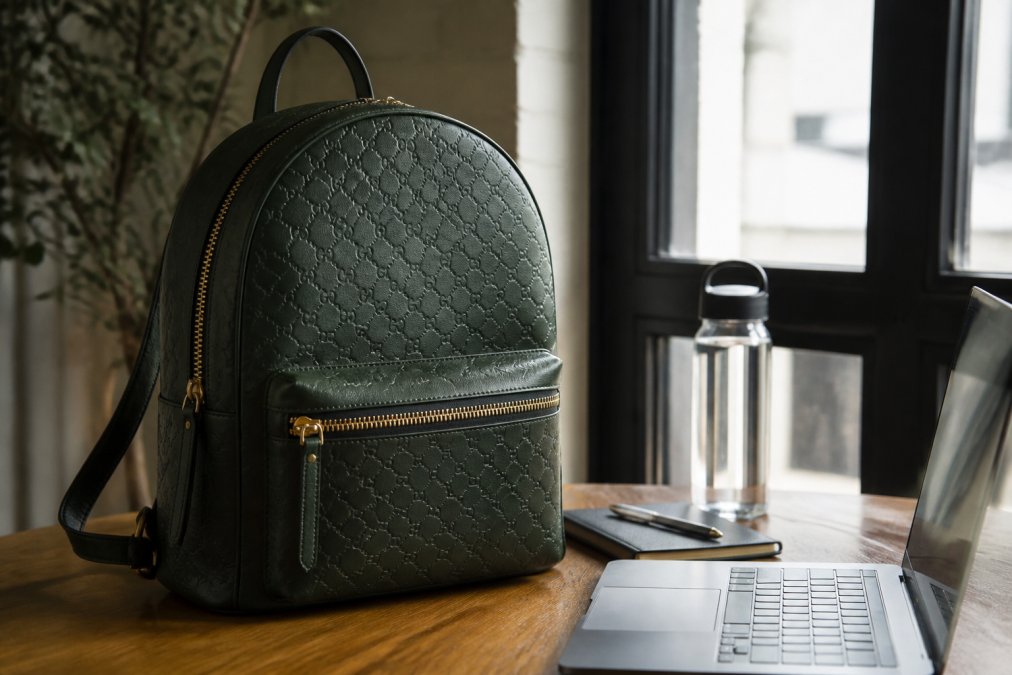
| Pick | Price | Material | Weight | Best For |
|---|---|---|---|---|
| Coach Green Monogram Backpack | $150 | Leather with mesh back panel | Approx. 2 lbs | Laptop commuting and daily work carry |
| Badgley Mischka Plum Backpack | $30 | Vegan leather, quilted chevron | Approx. 1.5 lbs | Light everyday carry with style |
| bebe Pink Quilted Mini Backpack | $40 | Faux leather, gold-tone chain | Under 1 lb | Minimalist carry and personal item use |
| bebe Tan Quilted Mini Backpack | $40 | Faux leather, logo clasp | Under 1 lb | Neutral, versatile daily carry |
| bebe Black Quilted Mini Backpack | $34 | Faux leather, magnetic snap flap | Under 1 lb | Compact urban commuting |
| Milwaukee Tool Bag T-1008 | $25 | Canvas, red and black | Approx. 1.5 lbs | Tool and gear transport |
| RIDGID Small Fabric Tool Bag T-243 | $18 | Fabric, 13x10x3 in | 0.5 lbs | Compact tool carry |
How these picks hold up over time
Price is the easy part. The harder question is what happens in year three. Here is how each category in our lineup tends to age:
- Leather (Coach Green Monogram). Full-grain and top-grain leather develops a patina and can be conditioned. It scuffs and shows rain. Reapply conditioner once or twice a year, and check strap anchor stitching annually.
- Vegan and faux leather (Badgley Mischka, bebe). These polyurethane-coated fabrics resist water and wipe clean, but the coating can crack and peel at flex points, strap anchors, zipper edges, and the top of the bag, after a few years. They aren't repairable like leather.
- Canvas (Milwaukee, RIDGID). Heavy canvas is a repairable material in the lineup, taking a patch, restitch, and wax reapplication. Tool bags in this category rarely fail at the fabric, zippers and handles go first.
Warranty and long-term support: what to check before you buy
- The warranty length and what it covers. Many brands cover manufacturing defects for one to two years but exclude normal wear, zippers, straps, and fabric abrasion. Read the exclusions, not the headline.
- Whether replacement parts exist. Zipper pulls, strap anchors, and buckles are the parts that fail first. A brand that sells or ships these parts extends the bag's life.
- Whether repairs are offered. Some brands run repair programs; others will only replace. A repair path is often cheaper and keeps a broken-in bag in service.
At Tools, Handbags, and More, our custom sourcing service can track down specific bags, replacement hardware, and hard-to-find accessories when they aren't in our current catalog. If you need a particular size, color, or brand of everyday carry backpack, we'll hunt it down rather than tell you it's unavailable.
How to Maintain and Repair Your EDC Backpack
At Tools, Handbags, and More, our custom sourcing service can track down specific bags, replacement hardware, and hard-to-find accessories when they aren't in our current catalog. If you need a particular size, color, or brand of everyday carry backpack, we'll hunt it down rather than tell you it's unavailable.
Frequently Asked Questions
What features make an everyday carry backpack durable?
Look for reinforced stitching, high-denier fabrics like ballistic nylon or waxed canvas, and quality zippers such as YKK. A durable everyday carry backpack also needs a padded laptop sleeve, weather-resistant coating, and a comfortable suspension system. These features ensure the bag withstands daily use, protects your gear, and maintains its shape over time. Prioritize construction quality over extra pockets for long-term reliability.
What is the best material for a long-lasting EDC backpack?
Ballistic nylon and waxed canvas are top choices for a buy it for life backpack. Ballistic nylon resists abrasion and tearing, while waxed canvas offers water repellency and develops a unique patina. Both materials handle urban commuting and travel well. Avoid lightweight polyester if you want maximum durability. Also check for PFAS-free water-repellent coatings if environmental impact matters to you.
How many liters should an everyday carry backpack be?
Most people find 20 to 30 liters ideal for daily carry. This size fits a laptop, charger, notebook, water bottle, and small personal items without being bulky. If you commute with gym clothes or groceries, aim for 25 to 30 liters. For minimalist carry, 15 to 20 liters works. Consider your load distribution and whether you need quick-access pockets for frequently used items.
Are expensive EDC backpacks worth the investment?
A well-made durable everyday carry backpack often costs more upfront but can last longer than cheap alternatives. Look for brands with repair programs, overbuilt construction, and high-tensile materials. The cost per use can drop when a bag survives daily commuting for several years. If you value gear accessibility, laptop security, and comfort, spending more can be justified. Check for sales or custom sourcing options to find better value.
How do I clean and maintain my everyday carry backpack?
Empty all pockets and shake out debris. For nylon or canvas, use a soft brush with mild soap and warm water, then air dry away from direct heat. Waxed canvas needs re-waxing periodically to maintain water repellency. Check zippers for grit and lubricate with a silicone-based product if needed. Store your bag in a cool, dry place. Regular maintenance extends the life of your EDC backpack and keeps it looking new.