

How to Choose Sustainable Handbags That Last
Table of Contents
- Start With a Durable Handbag Materials Guide
- How to Care for Leather Handbags So They Last for Years
- Sustainable Fashion Certifications Explained
- Second-Hand and Pre-Owned: The Fastest Route to Sustainable Handbags
- Repair, Resale, and End-of-Life: What Happens After You Buy
- Cost-Per-Wear: The Math That Separates Sustainable Handbags From Fast Fashion
- Frequently Asked Questions
Last Updated: September 24, 2026
Start With a Durable Handbag Materials Guide
Learning how to choose sustainable handbags that last starts with one question: what is the bag actually made of? Sustainable handbags are bags built from materials and construction methods that resist wear for years, not seasons, so the most sustainable bag you can buy is usually the one you don't have to replace. At Tools, Handbags, and More, we handle pre-owned and new bags, and the pattern is consistent: material quality and stitching decide whether a bag survives years of daily use.
Here's what most guides get wrong: they rank materials by how "green" they sound instead of how they perform. A bag that biodegrades in a landfill is not sustainable if it falls apart in eight months and gets replaced twice a year. Durability is the environmental strategy. Everything else is marketing.
Full-Grain and Pebbled Leather
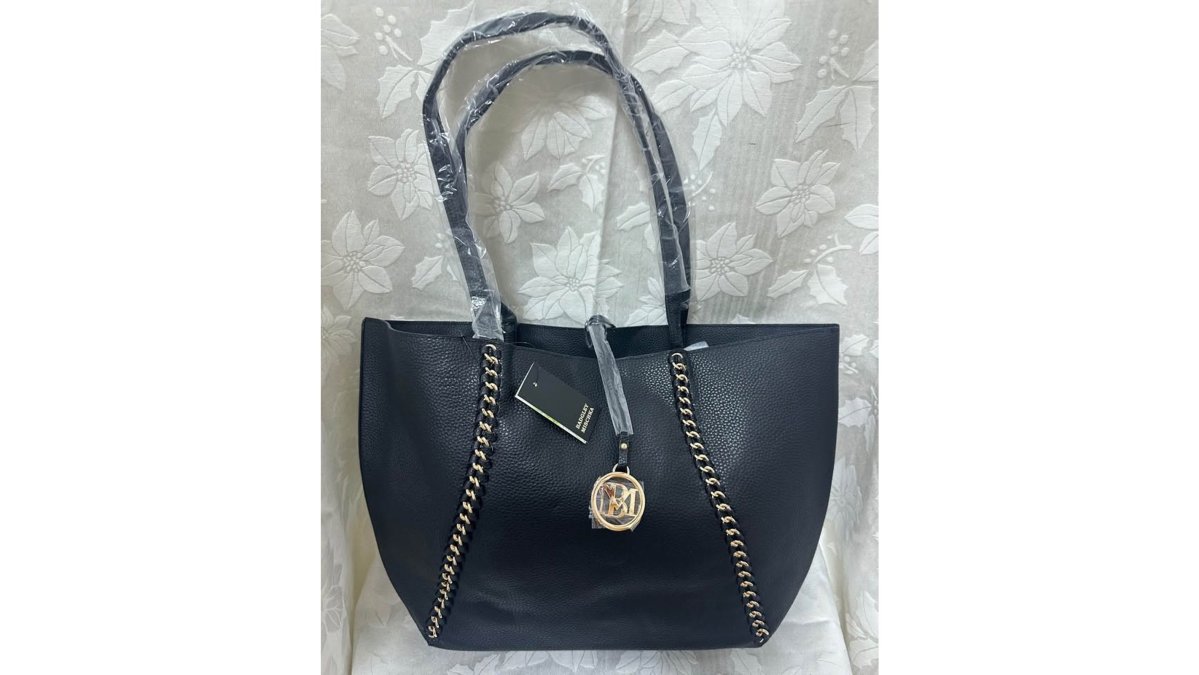
Full-grain leather is the strongest part of the hide, and it develops a patina instead of cracking. Pebbled leather, common in structured designs from Coach and Badgley Mischka, is full-grain leather embossed for texture, which hides scratches and holds a structured shape. Heavy-duty hardware, reinforced stitching, and a fabric lining all signal durable construction.

A common mistake is judging leather by feel alone. Press the surface: fine creases that spring back mean a tight grain, while a waxy, spongy feel often means a corrected or bonded finish that peels within a couple of years.
Plant-Based Leather, Vegan Leather, and Recycled Fabrics
Plant-based leather is a category of synthetic alternatives made from materials like cactus, apple, or mushroom fibers, and quality varies enormously. Vegan leather is a broader label that includes both plant-based options and polyurethane, and the two behave very differently. Recycled polyester and upcycled fabrics work well for linings and casual bags, but they don't match leather for structure.
The performance test is simple: bend the material and watch how it recovers. Natural fibers and quality plant-based leathers spring back; cheap synthetic alternatives crease permanently.
| Material | Durability | Repairability | Best For |
|---|---|---|---|
| Full-grain leather | Highest | Excellent | Daily structured bags |
| Pebbled leather | High | Good | Scratch resistance |
| Plant-based leather | Varies | Limited | Casual, vegan buyers |
| Recycled polyester | Moderate | Poor | Linings, totes |
How to Care for Leather Handbags So They Last for Years
Caring for a leather handbag is a four-step routine: clean, condition, protect, and store. Skip any step and the leather dries, cracks, or discolors long before the stitching gives out. But the routine only gets you so far, the bags that actually reach ten or fifteen years are the ones that get repaired, not just cleaned. This section covers both.
The Four-Step Routine
- Wipe the surface with a dry microfiber cloth after each use to remove dust and body oils. Oils are the slow killer; they darken leather and attract grit that abrades the finish.
- Clean monthly with a pH-neutral leather cleaner and a soft cloth, working in small circles. Avoid saddle soap on finished leather, it is alkaline and can dull the surface over time.
- Condition every two to three months with a cream conditioner, focusing on flex points: handles, strap attachment points, flap edges, and the top opening. Those are where leather dries and cracks first.
- Store the bag stuffed with tissue in a breathable cotton dust bag, away from direct sunlight and heat. Stuffing holds the shape; a breathable bag lets moisture escape.
What most guides miss is storage. A bag crushed against others in a closet creases permanently, and a plastic bag traps moisture that causes mildew. Maintenance is also the cheapest sustainability tool you own: a five-minute conditioning session adds years to a bag's working life.
When to Repair Instead of Replace
Most sustainability advice stops at cleaning. The bigger lever is repair, and it is the step almost every buying guide skips. A quality bag is built to be fixed; a fast-fashion bag is glued and cannot be.
What a cobbler or leather specialist can typically handle:
Coach Black Pebbled Leather Shoulder →
- Restitching seams where thread has frayed or pulled, usually the first structural failure on a well-made bag.
- Zipper replacement, including the slider and tape, which is a common failure point on totes and satchels.
- Edge refinishing, where the painted edge coat has worn away and the leather underneath is exposed.
- Strap and hardware repair, including re-riveting attachment points and replacing broken clasps.
- Corner rebuilding, where the base corners have worn through, using a leather patch matched to the original.
A common pattern is that a repair costs a fraction of replacing the bag, and the repaired bag often outlasts a new cheap one.
DIY Care You Can Do Yourself
You do not need a specialist for everything. A few tasks are safe to do at home with basic supplies:
- Conditioning, cream conditioner, applied sparingly with a cloth, buffed off after a few minutes.
- Cleaning hardware, a dry soft cloth; avoid metal polish, which can strip plating.
- Deodorizing the interior, a small dish of baking soda left inside overnight, then vacuumed out.
- Removing light surface scuffs, a fingertip of conditioner worked into the scuff in small circles.
Sustainable Fashion Certifications Explained
Sustainable fashion certifications are third-party verifications that a brand meets defined standards for materials, labor, or environmental impact. They exist because "eco-friendly," "green," and "natural" are not legally defined terms on a hangtag in the United States, the Federal Trade Commission's Green Guides set rules for environmental marketing claims, but they do not certify a bag as sustainable. A certification does something different: it puts an outside auditor between the brand's marketing and the buyer.
- B Corp Certification, administered by B Lab, assesses a company's entire social and environmental performance, including governance, workers, community, environment, and customer transparency. It is a whole-company score, not a product score, so a B Corp can still sell a bag made from low-durability material.
- Fair Trade Certified and Fairtrade International focus on labor conditions and sourcing in the supply chain, fair wages, safe conditions, no forced labor. For a handbag, this is the certification that speaks most directly to who stitched it.
- Global Organic Textile Standard (GOTS) covers organic fiber content and processing for textiles, which is relevant to cotton canvas and lining fabrics but not to leather.
- Leather Working Group (LWG) audits tanneries on environmental management, chemical handling, and traceability. If a brand uses leather and wants to prove the tannery is responsible, LWG is the relevant benchmark.
- Global Recycled Standard (GRS) verifies recycled content in a material and traces it through the supply chain, which is what you want to see behind a "recycled polyester" lining claim.
- Cradle to Cradle Certified evaluates a product across material health, material reuse, renewable energy, water stewardship, and social fairness. It is product-level and rigorous, but relatively few handbag makers hold it.
Second-Hand and Pre-Owned: The Fastest Route to Sustainable Handbags
Buying pre-owned is the single fastest way to shop sustainable handbags, because the bag already exists. No new materials, no new manufacturing, no new shipping footprint. The second-hand market has grown into a mainstream option, and a pre-owned bag from a quality maker often outlasts a new fast-fashion piece at the same price.
Repair, Resale, and End-of-Life: What Happens After You Buy
Most sustainability advice stops at purchase. That's a mistake, because the decisions after you buy determine the bag's real environmental impact.
Cost-Per-Wear: The Math That Separates Sustainable Handbags From Fast Fashion
Cost-per-wear is a bag's purchase price divided by the number of times you carry it, and it's the clearest way to compare a durable bag against a cheap one.
Frequently Asked Questions
What materials make a handbag truly sustainable?
Sustainability comes down to material durability and how long the bag stays in use. Full-grain and pebbled leather, organic cotton canvas, recycled polyester, and plant-based leather alternatives all reduce waste when they hold up for years. Look for heavy-duty hardware, reinforced stitching, and structured design, because a bag that survives for years can reduce the need for frequent replacements. Certifications like B-Corp and fair trade labels confirm the supply chain and ethical labor behind the materials.
Are vegan leather handbags more sustainable than real leather?
It depends on the specific material and how long it lasts. Plant-based leather made from cactus, pineapple, or mushroom fibers avoids animal agriculture, but some vegan leather is plastic-based and peels within a year, which sends it straight to landfill. Real leather from a pre-owned bag like a Coach pebbled leather shoulder bag can outperform a cheap synthetic alternative because it resists cracking. Compare cost-per-wear rather than assuming one material wins.
How can I tell if a handbag is high-quality and durable before buying?
Check four things: the material, the hardware, the stitching, and the structure. Pebbled or full-grain leather with silver-tone or gold-tone metal hardware holds up better than thin bonded leather with painted plastic zippers. Stitching should be tight and even, with no loose threads. A structured design keeps its shape instead of sagging. Pre-owned listings that show interior lining, brand patches, and style numbers give you verifiable proof of quality craftsmanship.
What certifications should I look for in sustainable handbag brands?
B-Corp certification is the strongest single signal because it audits the entire business, not just one product line. Fair trade certification confirms ethical labor practices in the supply chain. For materials, look for Global Recycled Standard or OEKO-TEX labels on recycled polyester and organic cotton. A brand that publishes supply chain transparency data, including factory names and environmental impact reporting, is usually more credible than one that only uses green marketing language.