

How to Maintain Your Everyday Carry Tools
Table of Contents
- What You'll Need: A Simple EDC Maintenance Kit
- Step 1: Inspect Your Everyday Carry Tools Weekly
- Step 2: Clean and Lubricate Your Gear
- Step 3: Choose the Best Oil for Pocket Knives
- Step 4: How to Sharpen a Pocket Knife at Home
- Step 5: Preventing Rust on Carbon Steel Tools
- Step 6: Storage and Organization for Your Carry System
- Common Mistakes That Damage Everyday Carry Tools
- Frequently Asked Questions
Last Updated: September 29, 2026
What You'll Need: A Simple EDC Maintenance Kit
Learning how to maintain your everyday carry tools starts with the right kit. A basic setup costs very little and saves you from replacing gear every year. Everyday carry means keeping a small set of useful tools on your person daily, usually a pocket knife, a multitool, a flashlight, and maybe a pen or lighter.
Here's what belongs in your maintenance kit:
- A soft brush or old toothbrush
- Microfiber cloths
- A cleaning solvent safe for metal
- Silicone-based lubricant
- A sharpening stone
- A small screwdriver for fasteners
- An organizer pouch for spare parts
Step 1: Inspect Your Everyday Carry Tools Weekly
A weekly inspection catches small problems before they become expensive ones. Set a recurring reminder and check every tool you carry.
Look for these issues:
- Loose screws or fasteners
- Wobbly blade pivot
- Frayed webbing or sheath straps
- Stiff or stuck zippers
- Rust spots or discoloration
- Dull or chipped blade edge
Signs of Wear and Tear to Catch Early
Small changes signal bigger problems. A blade that won't hold an edge means the steel is wearing thin. A handle that rattles means fasteners have backed out.
Fasteners, Pivot Tension, and Buckle Integrity
Fasteners loosen with vibration and temperature swings, but overtightening strips threads, snug is enough. For buckles, close and release them a few times and listen for a clean click; one that releases under light pressure needs replacing before it fails on your belt.
Step 2: Clean and Lubricate Your Gear
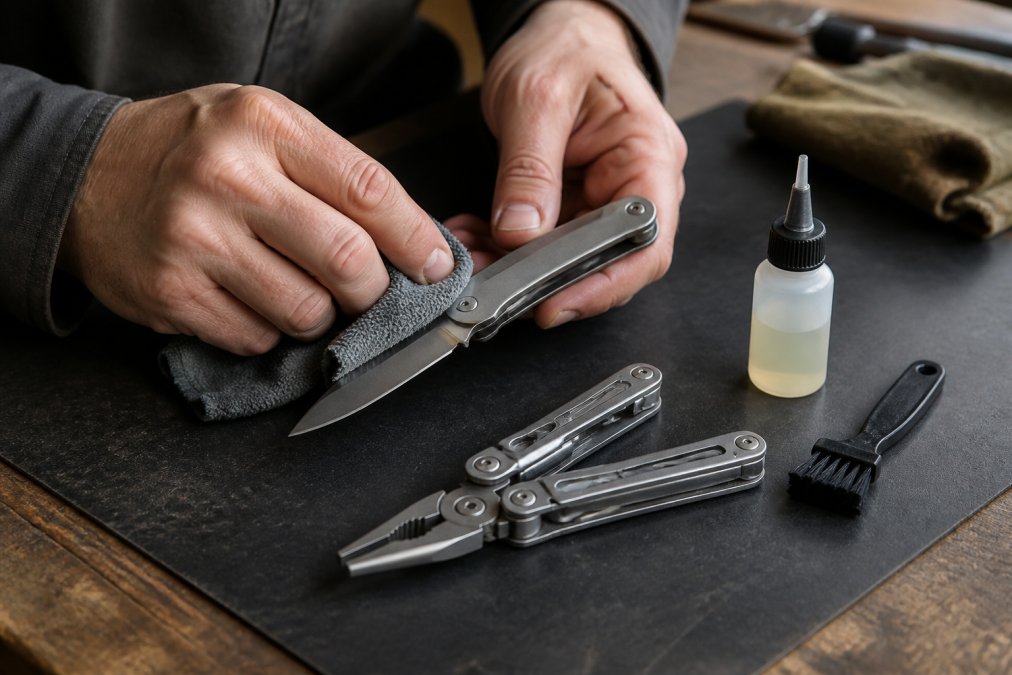
Dirt is the quiet killer of everyday carry gear: grit works into pivots and zippers, grinding metal against metal. The bigger risk most guides skip is chemical damage, the wrong cleaner can cloud a polycarbonate lens, craze a plastic handle, strip a Cerakote or DLC coating, or dry out leather and nylon. Start with a dry brush on the pivot area, handle grooves, and blade tang, then wipe with a microfiber cloth before introducing any liquid.
Cleaning Solvent, Microfiber, and Zipper Maintenance
Use a cleaning solvent made for metal tools, applied to a cloth rather than directly to the tool. Wipe, then let the tool dry fully before lubricating. For zippers, brush the teeth clean, run a wax-based lubricant along them, and work the zipper open and closed a few times. Microfiber beats paper towels because lint in a pivot is future grit.
Chemical Compatibility: What's Safe for Each Material
Match the cleaner to the material.
- Anodized aluminum handles (common on multitools and flashlights): Mild dish soap and warm water are safe. Avoid ammonia-based cleaners and abrasive polishes, which dull the anodized layer, and chlorine bleach, which pits aluminum.
- Polycarbonate and acrylic lenses (flashlights, some tool windows): Use only water, a microfiber cloth, or an alcohol-free lens-safe cleaner. Isopropyl alcohol and ammonia-based glass cleaners haze or craze polycarbonate over repeated use.
- FRN, G10, and other reinforced polymer handles: These tolerate isopropyl alcohol and mild soap well. Avoid acetone, paint thinner, and MEK, they soften or discolor the resin.
- Leather sheaths and wallets: Use a dedicated leather cleaner or a lightly damp cloth, then condition with a leather balm. Never use alcohol, solvent, or dish soap, they strip natural oils and cause cracking.
- Nylon and polyester webbing, pouches, and bags: Mild soap and cool water. Avoid bleach and fabric softener, which degrade fibers and water-resistant coatings.
- Blade coatings (DLC, Cerakote, titanium nitride): Chemically tough but scratch-prone. Skip abrasive pads and gritty polishes; a soft cloth with mild soap is enough.
- Stainless and carbon steel blades: Isopropyl alcohol is fine for degreasing. Avoid prolonged soaking in acidic cleaners (vinegar, citrus-based degreasers), which accelerate pitting on carbon steel.
Environmental Adjustments to Your Cleaning Routine
Cleaning cadence depends on where you carry, not just how often.
- Coastal or salt-air environments: Rinse metal tools with fresh water after any salt spray exposure, dry immediately, and re-oil weekly rather than monthly. Salt accelerates corrosion even on stainless.
- Arid and dusty environments: Dry-brush more often, dust is abrasive and packs into pivots. Use a dry or silicone-based lubricant that won't trap grit, and avoid heavy oils that turn dust into paste.
- Humid and rainy climates: Prioritize moisture displacement after every wet carry. A quick wipe-down and thin oil film after each exposure beats a monthly schedule.
- Cold-weather carry: Standard oils thicken and gum up a pivot. Silicone-based lubricants stay fluid at low temperatures, keeping one-handed opening working with gloves on.
Step 3: Choose the Best Oil for Pocket Knives
The best oil for pocket knives is a silicone-based lubricant for general use and a food-safe oil for knives that touch food. Silicone resists dust pickup better than standard oils and won't go gummy in cold weather, which matters if you carry your knife outdoors in winter.
Silicone-Based Lubricant vs. Food-Safe Options
Food-safe options include mineral oil and similar products. Use these on any blade you slice fruit or open packages with.
| Lubricant Type | Best For | Reapply |
|---|---|---|
| Silicone-based | Pivots, general carry | Monthly |
| Food-safe mineral oil | Blades used on food | After each wash |
| Wax-based | Zippers, sheaths | Every few months |
Step 4: How to Sharpen a Pocket Knife at Home
Learning how to sharpen a pocket knife takes about 20 minutes the first time. After that, touch-ups take five.
- Soak a water stone for 10 minutes before use.
- Hold the blade at a 15-20 degree angle against the stone.
- Push the edge across the stone like you're slicing a thin layer off it.
- Repeat 10-15 times per side.
- Flip and repeat on the other side.
- Switch to the fine grit for honing.
- Wipe the blade clean and test on paper.
Sharpening Stone, Honing, and Blade Edge Retention
Honing realigns the edge; sharpening removes metal to create a new one. Most weekly maintenance only needs honing. Blade edge retention depends on steel type and cutting habits, stop cutting on hard surfaces like glass or ceramic, which dulls an edge faster than anything else.
Step 5: Preventing Rust on Carbon Steel Tools
Preventing rust on carbon steel tools comes down to three things: keep them dry, keep them oiled, and keep them clean. Carbon steel holds an edge well but rusts fast without care, and the right strategy depends on your environment, a coastal carry and a desert carry need different routines. Wipe your blade after every use; even hand moisture causes surface rust overnight.
Corrosion Resistance and Chemical Compatibility
Stainless steel resists corrosion better than carbon steel, but it isn't rust-proof. Salt, sweat, and humidity attack it over time, and the chromium oxide layer that protects stainless can be compromised by chlorides, which is why coastal carry and sweat-soaked pockets are the two most common rust scenarios. Bleach and acidic cleaners eat metal finishes, so rinse and dry your knife right after chemical exposure.
Environmental-Specific Rust Prevention
Rust problems change with your climate, so match your routine to your environment.
- Coastal and salt-air environments: Salt is the biggest corrosion accelerator. Rinse tools with fresh water after ocean or beach exposure, dry thoroughly, and apply a corrosion-inhibiting oil weekly. Consider a dedicated rust-prevention wipe (sold as gun-care or marine-grade wipes) rather than a standard lubricant. Stainless steel is not immune, chlorides pit it over time.
- Arid and dusty environments: Rust risk is lower, but dust is abrasive and traps moisture against metal. Use a dry-film or silicone-based protectant rather than wet oil, which turns dust into abrasive paste. Brush pivots clean before re-lubricating.
- Humid and rainy climates: A thin, reapplied film beats a thick, infrequent coat. Silica gel packs in storage pouches help, as does a breathable pouch rather than a sealed plastic bag that traps condensation.
- Cold and winter environments: Temperature swings cause condensation when gear moves from cold outdoors to warm indoors. Let tools reach room temperature before opening, and wipe down after. Silicone-based lubricants stay fluid and protect at low temperatures where heavier oils stiffen.
Long-Term Storage for Non-Active Gear
Before storing a tool for months:
- Clean it thoroughly, including the pivot and hidden crevices
- Lubricate all moving parts with a silicone-based or corrosion-inhibiting product
- Wrap it in a cloth or place it in a pouch, breathable beats sealed for most climates
- Add a silica gel pack, replacing it every few months
- Store it somewhere dry and temperature-stable, away from concrete floors and exterior walls that wick moisture
- For carbon steel blades, apply a heavier protective coat than for daily carry
A sturdy bag helps here. The Milwaukee Tool Bag T-1008 has a zippered main compartment that keeps dust and moisture off stored gear, and its dual handles make it easy to move a full collection. At $25.00, it costs less than one replacement knife.

Step 6: Storage and Organization for Your Carry System
A good carry system keeps tools dry, separated, and ready to grab, storage is half of maintenance. An organizer pouch protects gear from scratches and moisture and makes your load-out easy to audit. For a minimalist setup, use one pouch per role: one for work, one for weekends, and swap the whole pouch instead of rebuilding your carry every day.
Long-Term Storage for Non-Active Gear
A sturdy bag helps here. The Milwaukee Tool Bag T-1008 has a zippered main compartment that keeps dust and moisture off stored gear, and its dual handles make it easy to move a full collection. At $25.00, it costs less than one replacement knife.
Common Mistakes That Damage Everyday Carry Tools
Most damage comes from a handful of habits. Fix these and your gear lasts years longer.
- Storing tools wet. Even a damp sheath traps moisture against steel.
- Over-oiling pivots. Excess lubricant collects dust and forms abrasive paste.
- Using the blade as a screwdriver. The tip chips and the edge rolls.
- Sharpening too aggressively. You remove metal you can't put back.
- Ignoring loose fasteners. A backed-out screw can drop a tool mid-use.
- Cutting on hard surfaces. Glass and ceramic destroy an edge in seconds.
- Skipping inspections. Small rust spots become deep pitting in weeks.
Build a maintenance schedule and stick to it:
| Task | Frequency | Time Needed |
|---|---|---|
| Full inspection | Weekly | 5 minutes |
| Cleaning and wipe-down | Weekly | 10 minutes |
| Lubrication | Monthly | 5 minutes |
| Honing | Monthly | 5 minutes |
| Sharpening | As needed | 20 minutes |
| Long-term storage check | Every 3 months | 10 minutes |
Frequently Asked Questions
How often should I clean my EDC pocket knife?
Clean your everyday carry pocket knife every one to two weeks if you use it daily, and always after cutting anything sticky, wet, or corrosive. Wipe the blade with a microfiber cloth, brush out the pivot with a soft brush, then apply a thin layer of lubricant. If you work in humid or wet conditions, clean it more often to prevent rust and keep the folding action smooth.
What is the best oil for everyday carry multi-tools?
A silicone-based lubricant works well for most everyday carry multi-tools because it resists dust buildup and does not gum up the pivot. For knives that touch food, choose a food-safe mineral oil instead. Avoid heavy greases, which attract grit and slow deployment speed. Apply one or two drops at the pivot, work the tool open and closed a few times, then wipe off the excess.
How do I prevent rust on my EDC gear?
Preventing rust on carbon steel tools starts with drying gear completely after every use, then applying a thin coat of oil or a corrosion-resistant wipe. Store tools in a dry place, ideally in a tool bag or organizer pouch that keeps moisture away. For long-term storage of non-active gear, add a silica gel packet to the bag and check it every few months. Even stainless steel benefits from occasional oiling.
Should I sharpen my EDC knife at home or professionally?
Learning how to sharpen a pocket knife at home with a sharpening stone and a honing rod saves money and keeps your blade ready whenever it dulls. Home sharpening works well for routine touch-ups and maintaining blade edge retention. Send a knife to a professional only for major chips, reprofiling, or expensive blades you are not comfortable practicing on. Practice on a cheap knife first to build steady angle control.