

Source Specific Drone Models: A Complete Guide
Table of Contents
- Why Sourcing Specific Drone Models Matters
- Understanding Drone Classification and Hardware Compatibility
- How to Find Discontinued Drone Models
- How to Verify Drone Model Authenticity
- Drone Sourcing Services for Businesses
- Sourcing Strategies for Specific Use Cases
- Comparing Sourcing Options and Channels
- Conclusion
Last Updated: August 23, 2026
Why Sourcing Specific Drone Models Matters
Finding the exact drone model you need isn't always straightforward. Whether you're hunting for a discontinued unit, verifying authenticity, or assembling specialized equipment for industrial applications, sourcing specific drone models requires strategy, verification, and access to the right channels.
The challenge intensifies when you're looking for models no longer in production, custom configurations, or hardware that meets strict regulatory requirements. Many buyers discover that general retailers don't stock niche models, and specialized suppliers often operate in fragmented networks across collector communities, industrial procurement specialists, and reseller networks.
At Tools, Handbags, and More, we understand that finding specific drone models, whether for recreational aerial photography, professional 3D site modeling, or industrial mapping applications, demands more than a simple search. Our custom sourcing service helps you locate hard-to-find models, verify authenticity, and connect with the right suppliers for your exact needs. Below, we'll walk you through how to source specific drone models effectively, verify what you're buying, and navigate the channels that actually deliver results.
Understanding Drone Classification and Hardware Compatibility
Before you can source specific drone models, you need to understand how drones are classified and what hardware compatibility means for your sourcing strategy. Drone design types fall into distinct categories based on form factor, payload capacity, and flight controller architecture.
Quadcopters remain the most common design, with four rotors providing stability and moderate payload capacity. Hexacopters and octocopters add redundancy and lifting power, essential for industrial mapping where sensor integration demands heavier camera payloads. Fixed-wing drones optimize for endurance and range, making them ideal for geospatial accuracy over large survey areas. Each design type has different sourcing implications, discontinued quadcopter models flood the secondhand market, while specialized hexacopters require targeted procurement from industrial suppliers.
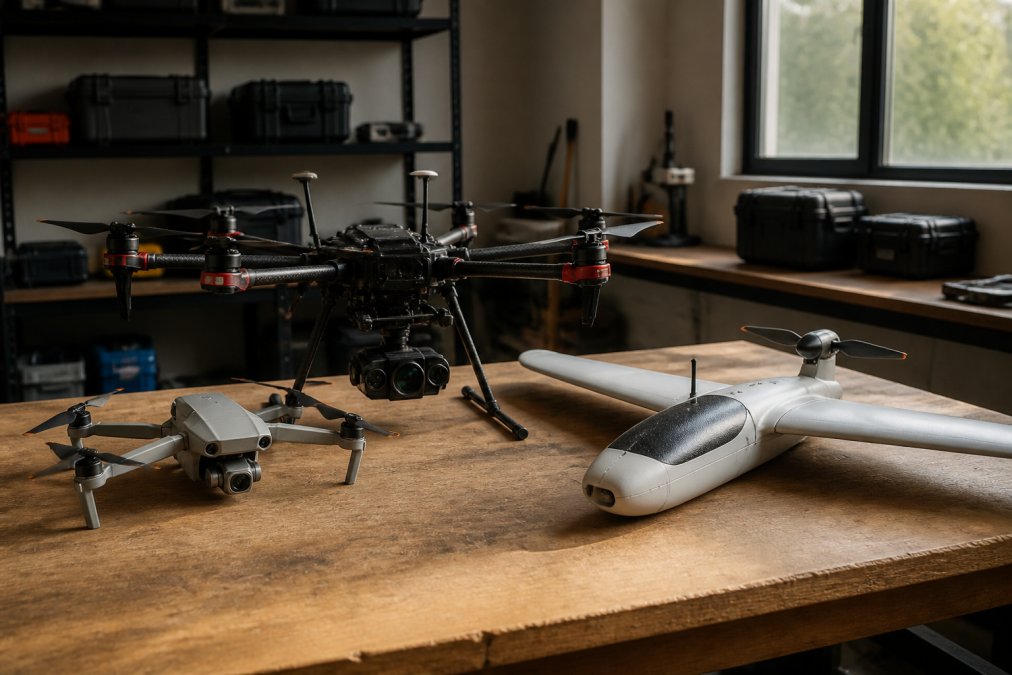
Payload capacity and sensor integration requirements determine which specific models will work for your use case. A drone rated for 2.7 kg payload can handle professional-grade cameras and LiDAR sensors, while smaller models max out at 500g (faa.gov). Flight controller firmware compatibility also matters, if you're sourcing a model to integrate with specific cloud-to-cloud streaming platforms or native SDK environments, you need hardware that supports those configurations.
Hardware agnostic software platforms exist, but they typically require custom configuration profiles and telemetry data translation layers. When sourcing models for data collection workflows, verify that the flight controller supports your intended processing engine. Industrial drones often feature proprietary firmware that locks you into specific vendors, while consumer models offer more flexibility for custom integration.
The sourcing challenge emerges when discontinued models had unique flight controller architectures. A 2019 model might use a completely different hardware support baseline than 2026 equivalents, meaning replacement parts, firmware updates, and software integration become friction points. Before committing to source a specific model, research whether active communities still support it and whether replacement components remain available.
How to Find Discontinued Drone Models
Discontinued drone models present a unique sourcing puzzle. Inventory disappears from official channels, but demand persists among professionals who relied on specific capabilities or hobbyists seeking particular form factors.
Tracking inventory across specialty retailers requires systematic searching. Start with retailers that focus on industrial or professional drone equipment, they maintain deeper inventory records than generalist shops and often stock discontinued models for clients with existing fleets. Retailers specializing in aerial photography equipment frequently carry older models because professional cinematographers often prefer proven hardware over newer generations.
eBay, specialized drone forums, and marketplace platforms dedicated to used equipment host active reseller networks. However, these channels require verification vigilance, counterfeit models circulate, and sellers sometimes misrepresent specifications or condition. Search for model-specific communities on Reddit, specialized drone forums, and manufacturer user groups. These communities often maintain inventory tracking threads and can point you toward legitimate resellers.
Connecting with collector networks and resellers unlocks access to models outside mainstream channels. Drone enthusiasts who collect specific generations or manufacturers often sell duplicates or upgrade surplus equipment. Facebook groups dedicated to particular drone brands maintain active member bases willing to facilitate sales. Professional pilots upgrading to newer models frequently list older equipment through these networks before considering broader marketplaces.
Direct outreach to industrial procurement specialists can yield results when you're sourcing models for business applications. These specialists maintain supplier relationships across Asia, Europe, and North America, and they often source discontinued models for clients maintaining legacy fleets. They charge sourcing fees, but they handle verification, warranty coordination, and integration testing, valuable services when authenticity risk is high.
Tools, Handbags, and More's custom sourcing service connects you with these networks directly. Instead of hunting through fragmented marketplaces, we use relationships with specialty retailers, collector networks, and industrial suppliers to locate your specific model, verify authenticity, and handle logistics.
How to Verify Drone Model Authenticity
Authenticating drone models before purchase prevents costly mistakes and ensures you're buying genuine hardware with proper firmware support.
Identifying clone models and counterfeit hardware requires examining multiple verification points. Start with the serial number, every legitimate drone carries a unique identifier linked to the manufacturer's database. Contact the manufacturer directly with the serial number and ask them to confirm production date, original specifications, and warranty status. Manufacturers maintain production records and can immediately flag clones or units reported stolen (the FTC).
Physical inspection reveals counterfeits that digital verification misses. Examine the flight controller board directly, genuine units feature consistent soldering, proper component placement, and manufacturer branding. Counterfeit boards often show poor soldering, misaligned components, or missing regulatory markings. Camera gimbal construction quality differs dramatically between authentic and clone models. Genuine gimbals move smoothly with consistent resistance; counterfeits often exhibit grinding or stuttering motion.
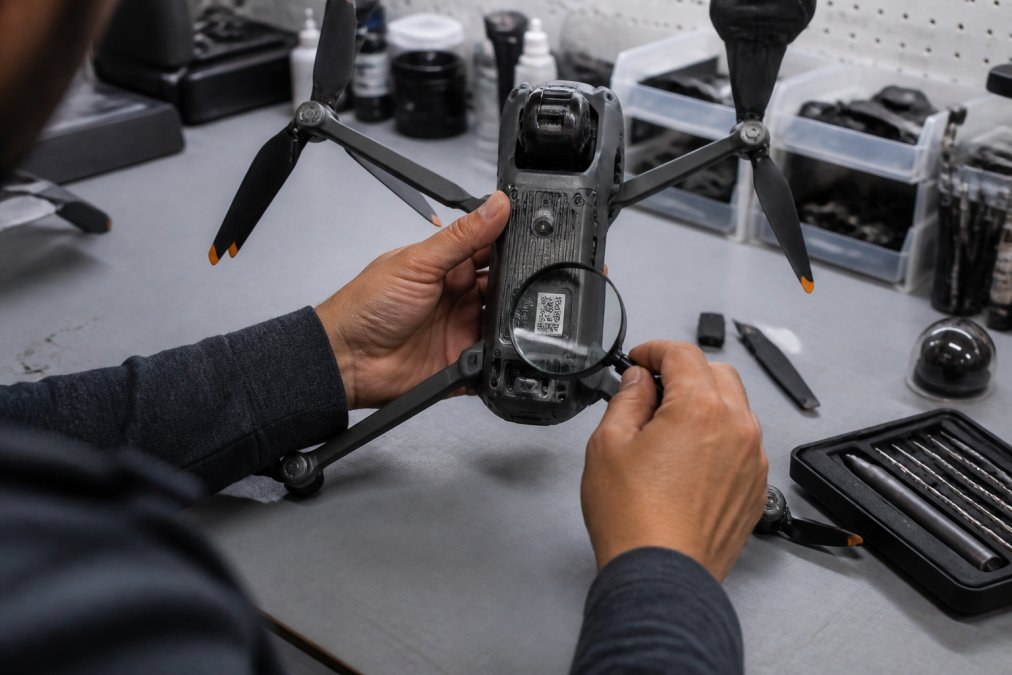
Checking firmware compatibility and flight controller verification establishes whether the hardware matches claimed specifications. Connect the drone to official software, manufacturer apps or flight planning software, and verify that the system recognizes the model correctly. Firmware version numbers should align with the unit's production date. A drone claiming 2022 manufacture shouldn't run firmware released in 2024 unless it's been updated.
Request flight logs from the seller if purchasing used equipment. Flight controller telemetry data reveals actual flight hours, crash history, and sensor calibration status. A unit claiming 50 flight hours but showing 500 hours in logs indicates either misrepresentation or a cloned flight controller. Inspect sensor calibration data, improperly calibrated IMU or compass readings suggest either counterfeit components or inadequate maintenance.
Test the remote controller pairing process. Genuine flight controllers follow manufacturer-specific pairing protocols. Clones often use generic pairing sequences or exhibit connectivity issues. Request a pre-purchase video call where the seller powers on the unit, launches the official app, and demonstrates full functionality. This real-time verification catches many counterfeits that pass static inspection.
Drone Sourcing Services for Businesses
Professional procurement for industrial applications requires different strategies than consumer sourcing. Businesses deploying drones for data collection, 3D site modeling, or geospatial accuracy work with specialized sourcing partners who understand regulatory requirements, hardware integration, and fleet management.
Professional procurement services handle vendor qualification, specification matching, and integration testing. They maintain relationships with authorized distributors across multiple manufacturers, ensuring you access genuine hardware with proper warranty coverage and technical support. For industrial mapping applications requiring specific payload capacity or sensor integration, these services verify that hardware supports your data processing engine and cloud infrastructure.
Custom configuration and data collection setup go beyond equipment sourcing. Professional services help you assemble complete systems, drone platform, camera payload, flight controller configuration, firmware customization, and integration with your existing telemetry data infrastructure. They verify that the complete system produces the geospatial accuracy your project demands and that flight planning software integrates properly with your site rendering and 3D modeling workflows.
Industrial drone sourcing typically involves compliance verification. Regulatory requirements vary by application, commercial operators need FAA Part 107 compliance, specific industries require additional certifications, and some jurisdictions impose restrictions on hardware imports or remote ID capabilities. Professional sourcing services navigate these requirements and source equipment meeting your regulatory obligations.
Tools, Handbags, and More connects businesses with sourcing specialists who understand industrial drone requirements. Rather than piecing together equipment from multiple suppliers, our service coordinates procurement, verification, and integration testing, ensuring your complete system functions as intended.
Sourcing Strategies for Specific Use Cases
Different applications demand different sourcing approaches. Aerial photography and industrial mapping have distinct hardware requirements, vendor relationships, and verification priorities.
Aerial photography and 3D site modeling requirements center on camera quality, gimbal stability, and image acquisition specifications. Professional cinematographers source models with proven camera sensors, reliable gimbal performance, and flight controller stability that minimizes jitter in video footage. They prioritize models with extensive firmware support, active user communities, and established integration with color grading and post-production software.
For 3D site modeling, sourcing focuses on sensor integration and data processing compatibility. You need drones supporting high-resolution camera payloads, sometimes with additional sensors like thermal cameras or multispectral arrays. The flight controller must support precise geolocation of each image, this requires accurate GPS, compass calibration, and telemetry data recording. Software integration matters: your drone must feed data into orthomosaics generation, semantic segmentation pipelines, and site rendering workflows.
Industrial mapping and geospatial accuracy needs emphasize payload capacity, flight endurance, and sensor redundancy. Mapping professionals source models with proven RTK-GPS systems for centimeter-level accuracy, redundant flight controllers for mission reliability, and extended battery capacity for large survey areas (usgs.gov). They prioritize models with native SDK support, allowing custom firmware integration for specialized data collection workflows.
Regulatory sourcing requirements vary dramatically by industry. Construction sites, agricultural surveys, and infrastructure inspection each impose different compliance demands. When sourcing for regulated applications, verify that your specific model complies with remote ID requirements, operates within approved frequency bands, and supports necessary telemetry logging for regulatory documentation.
Comparing Sourcing Options and Channels
Different sourcing channels offer distinct advantages. Understanding where to source specific drone models helps you match your needs to the right channel.
| Sourcing Channel | Best For | Verification Difficulty | Availability | Cost Factor |
|---|---|---|---|---|
| Official manufacturer retailers | Current models, warranty coverage | Low | High | Standard retail |
| Authorized industrial distributors | Professional configurations, compliance | Low | Moderate | Premium for integration |
| Specialty drone retailers | Niche models, expert consultation | Moderate | Moderate | Competitive |
| Secondhand marketplaces | Discontinued models, budget sourcing | High | Variable | Discounted |
| Collector networks | Rare/vintage models, specialized variants | High | Limited | Premium for rarity |
| Custom sourcing services | Hard-to-find models, verification | Low | High | Service fees + equipment |
Official channels provide warranty coverage and manufacturer support, but they stock only current production models. Authorized industrial distributors understand integration requirements and can configure complete systems, but they charge premium pricing. Specialty retailers offer expertise and moderate inventory, but verification requires careful inspection. Secondhand markets provide access to discontinued models at lower cost, but authentication risk increases significantly.
Collector networks and enthusiast communities unlock rare models, but transaction security depends entirely on individual seller reputation. Custom sourcing services like Tools, Handbags, and More bridge the gap, they combine access to multiple channels with professional verification, handling authentication and logistics so you avoid the risks of direct marketplace transactions.
Sourcing specific drone models demands more than searching general retailers. You need access to specialized networks, verification expertise, and understanding of hardware compatibility requirements. Whether you're hunting discontinued models, verifying authenticity, or assembling industrial systems, the right sourcing approach saves time, reduces fraud risk, and ensures you get exactly what you need.
Tools, Handbags, and More specializes in helping you find specific drone models, even when they're not in our current stock. Our custom sourcing service taps into professional networks, verifies authenticity through hardware inspection and manufacturer confirmation, and coordinates delivery of your exact specifications. Contact our sourcing team to discuss your specific drone model needs and discover how we can help you locate the equipment you're looking for.
Frequently Asked Questions
Can you really source specific drone models that aren't in stock?
Yes. Professional sourcing services use multiple channels: specialty retailers, collector networks, manufacturer partnerships, and reseller connections. Success depends on the model's availability in the secondary market and whether it remains in production. Discontinued models take longer to locate. A reliable sourcing service will give you realistic timelines upfront and verify authenticity before delivery, ensuring you receive exactly what you ordered.
How do I verify a drone model is authentic and not a clone?
Check three things: the serial number against the manufacturer's database, the firmware version through the official flight controller software, and the physical components like the camera sensor and circuit board markings. Counterfeit models often have misspelled labels, incorrect solder joints, or firmware that won't connect to native SDK software. Request photos of the flight logs and telemetry data from the seller before purchase to confirm the unit has been used and functions properly.
What should I know about finding discontinued drone models?
Discontinued models are sourced through specialist retailers, collector resale platforms, and business liquidation channels. Prices often exceed original retail because supply is limited. Always verify the model's hardware compatibility with your intended software and data processing engine before committing. Check whether replacement parts and firmware updates are still available, as manufacturer support typically ends shortly after discontinuation.
Do drone sourcing services for businesses differ from retail sourcing?
Yes. Business sourcing services focus on bulk procurement, custom configuration for specific payloads, and integration with data collection workflows. They verify hardware agnostic compatibility, handle fleet management across multiple units, and coordinate with your cloud-to-cloud streaming infrastructure. They also manage regulatory compliance for remote ID and flight planning software requirements, which retail sourcing typically doesn't address.
This article was written using GrandRanker