

Best Display Cases for Tumbler Collections in 2026
Table of Contents
- Why Your Tumbler Collection Needs a Proper Display Case
- Acrylic Tumbler Display Stands: The Versatile Workhorse
- Glass vs. Acrylic: Which Material Protects Better?
- Wall-Mounted and Vertical Storage to Maximize Space
- How to Organize Tumblers at Home by Size and Color
- DIY Tumbler Display Ideas for Craft Fairs and Booths
- What to Look For: Weight Limits, UV Protection, and Locks
- Frequently Asked Questions
Last Updated: September 7, 2026
Why Your Tumbler Collection Needs a Proper Display Case
Once you own more than a few, insulated bottles become collectibles that deserve better than a crowded cabinet. The right case turns a functional stack into a curated showcase that protects your investment.
At Tools, Handbags, and More, we stock popular Stanley tumblers and understand how quickly collections grow. Beyond looks, a proper case prevents scratches, dents, and the dust buildup that dulls metallic finishes over time.
Most collectors overlook one critical fact: tumblers are heavy. A standard 40-ounce bottle weighs around a pound and a half when empty, and a shelf of eight or more puts serious strain on cheap shelving. That weight factor should drive every choice you make.
Below, we'll break down the best display cases for tumbler collections by material, mounting style, and organization strategy, including the structural details most guides skip.
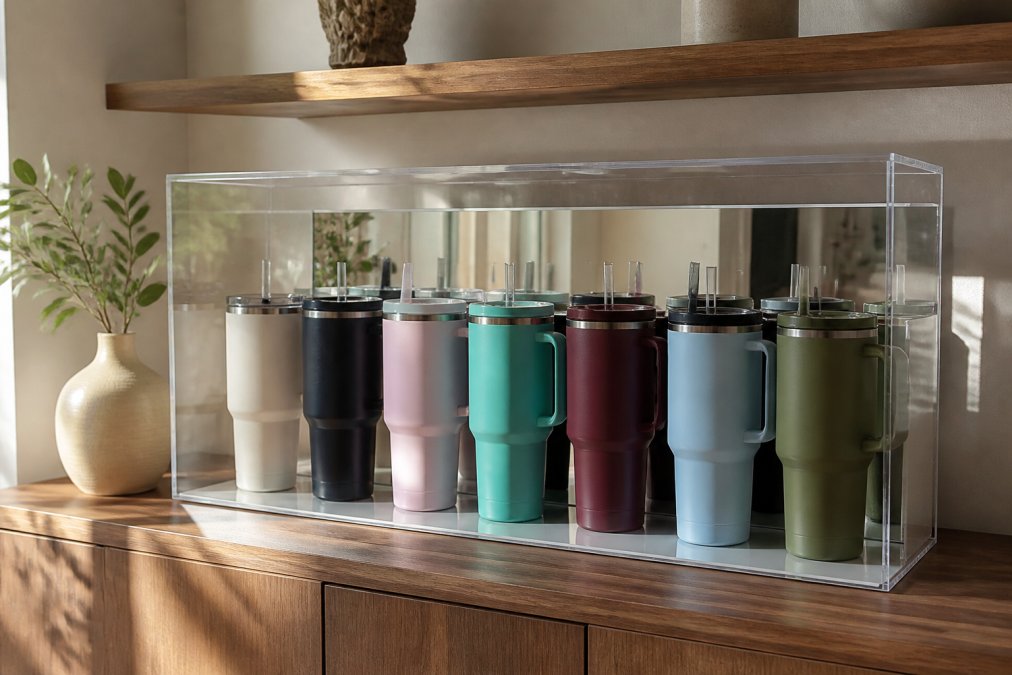
Acrylic Tumbler Display Stands: The Versatile Workhorse
Acrylic tumbler display stands are the most practical starting point for most collectors because they balance visibility, cost, and weight capacity. Unlike glass, acrylic won't shatter if a heavy bottle tips over.
Acrylic's adaptability is its standout feature. You can find tiered risers, individual pedestals for hero pieces, and modular units that expand as your collection grows. Acrylic also accepts LED strip lighting beautifully.
The main drawback is scratching. Standard acrylic scratches more easily than glass, though many modern units use scratch-resistant coatings. Look for units with reinforced bases and thicker panels, typically 3-5 millimeters, which resist bowing under the weight of multiple large tumblers.
Glass vs. Acrylic: Which Material Protects Better?
Glass offers superior scratch resistance and a premium look, while acrylic wins on safety, weight, and cost. The real differentiator is behavior under sustained load.
Tempered glass cases provide the clearest view and resist clouding from certain cleaners. The trade-off is weight: a glass case with multiple shelves can be awkward to mount and dangerous if bumped.
Acrylic, by contrast, is lighter and safer around children and pets. A dropped acrylic case might crack but won't produce dangerous shards.
| Material | Scratch Resistance | Weight | Safety | Best Location |
|---|---|---|---|---|
| Tempered Glass | High | Heavy | Shatters on impact | Formal living spaces |
| Acrylic | Moderate | Light | Won't shatter | Kids' rooms, high-traffic areas |
| Polycarbonate | High | Light | Won't shatter | Extreme durability needs |
The Load-Bearing Difference Most Guides Skip
A 40-ounce tumbler weighs roughly 1.5 pounds empty. A shelf of six creates a 9-pound static load, but the real risk is dynamic load, the momentary force when you slide a bottle out or set one down hard. That force can be two to three times the static weight.
Acrylic panels under 3 millimeters thick will bow visibly under a sustained 15-pound load across a 24-inch span, stressing glued joints until they crack. Tempered glass does not bow perceptibly at these weights, but it has zero give, if overloaded, it fails suddenly and completely.
For acrylic cases, look for panels at least 5 millimeters thick for any shelf holding more than four large tumblers. Check whether the shelf is supported along its full length; full-length support channels dramatically reduce flex. For glass, verify the shelf is tempered (look for the small etched logo in the corner) and that the frame uses metal clips, not just adhesive.
Mounting and Fastener Reality
Wall-mounted glass cases are heavier than they look. A four-shelf glass case with 3/16-inch tempered shelves can weigh 40-60 pounds empty. Add 30 pounds of tumblers, and you are asking drywall anchors to hold 90 pounds or more. That is why mounting into studs is non-negotiable for glass, and why acrylic cases, at roughly half the weight, are more forgiving for renters.
Acrylic also handles thermal expansion better than glass. In a garage or sunroom where temperatures swing, acrylic expands and contracts without stress fractures, while glass can develop stress cracks at the corners.
For most households, acrylic provides the best balance of safety, weight, and cost. If you want the clarity of glass without the weight, consider polycarbonate, though it scratches more easily and costs more per square foot.
Wall-Mounted and Vertical Storage to Maximize Space
Wall-mounted and vertical storage solutions let you display a substantial collection without sacrificing floor space.
Floating shelves with front rails or lip edges are the simplest vertical solution, preventing tumblers from sliding forward. For larger collections, wall-mounted acrylic cases with individual cubbies create a clean, museum-like presentation.
Vertical storage also solves weight distribution. A tall, narrow case distributes load across multiple wall studs, while a wide, low case concentrates weight in a smaller area. Always mount into studs when displaying more than four heavy tumblers.
The National Association of Home Builders' guidelines on shelving installation recommend verifying wall structure before mounting any display heavier than 20 pounds, which is worth checking before you drill.
Tiered countertop displays offer vertical organization without wall mounting, working especially well on kitchen islands or buffet tables.
How to Organize Tumblers at Home by Size and Color
Organizing tumblers at home by size and color creates a display that looks intentional rather than cluttered. Group by height first, then arrange within each group by color gradient.
Start by measuring your tallest tumbler. Most display cases accommodate 40-ounce bottles, but oversized options or those with thick handles may need extra clearance. Assign each height group to a shelf level with at least two inches of headroom above the tallest bottle.
Color arrangement follows a spectrum from light to dark or a rainbow order, depending on your decor. For collections with many similar colors, alternate finishes, such as matte and glossy, to add texture.
Rotating seasonal colors to the front keeps the display feeling current. Many collectors maintain a core display of everyday bottles and swap in limited editions as they acquire them.
DIY Tumbler Display Ideas for Craft Fairs and Booths
DIY tumbler display ideas help sellers present their work professionally at craft fairs and vendor booths without spending heavily on retail fixtures.
The most effective DIY approach uses modular components that pack flat. Wooden risers in varying heights, cut from a single sheet of plywood, create dimension when arranged in steps. Paint them to match your brand and add felt padding to prevent scratches.
For vendors, lighting is the secret weapon. Battery-operated LED puck lights placed behind and above your display draw attention from across a hall. Position lights to create a glow around each tumbler rather than shining directly into buyers' eyes.
The Small Business Administration's guide to market booth presentation emphasizes that visual merchandising directly influences perceived product value, something craft vendors can apply immediately.
A locking mechanism is worth adding to any booth display. Simple cabinet locks or small padlocks on display doors protect inventory during busy moments.
The Lighting Tutorial Competitors Skip
For tumbler collections, lighting is the single highest-impact upgrade you can make, especially for glitter, metallic, and color-shift finishes that look flat under overhead fluorescent booth lights. Here is a practical approach for both craft booths and home displays.
Choose the right strip. Use 12-volt LED strip lights with a color temperature around 4000K (neutral white) (energy.gov). Warm 2700K light makes bright colors look muddy; cool 5000K light washes out pastels. Look for strips with a CRI (color rendering index) of 90 or higher, standard strips often have CRI around 80, which distorts reds and oranges.
Position for finish, not just visibility. Glitter and metallic tumblers reflect light directionally. A single overhead light creates harsh hotspots. Instead, place strips at a 45-degree angle below the tumbler base, pointing upward. This grazes the surface and makes glitter particles catch light individually. For matte finishes, front lighting at a low angle reveals texture without glare.
Install without damaging the case. Adhesive-backed strips fail on acrylic and painted wood within weeks. Use small aluminum channels with clip-on diffusers, they cost a few dollars per 12-inch section and mount with screws or heavy-duty double-sided tape. Route wires along the back edge of the case, out of sight, and use a connector kit to join strips at corners rather than soldering.
Power for a full show day. A 16-foot strip draws roughly 1.5 amps at 12 volts. A standard 5,000 mAh USB power bank (about the size of a deck of cards) will run that strip for 6-8 hours, enough for a full market day. For home displays, a wall adapter with a timer switch prevents leaving lights on overnight, which extends LED life and reduces heat buildup inside enclosed cases.
Test before you commit. Set up your lighting at home the night before an event. Check for dead zones, wire visibility, and whether the light creates glare on the front of the case that obscures the tumblers. A common mistake is lighting the case front rather than the products inside, the glass or acrylic reflects the strip and hides the collection.
A well-lit display does more than attract attention, it signals that your product is worth a premium price. Vendors who invest an afternoon in proper lighting consistently report stronger engagement at evening markets.
What to Look For: Weight Limits, UV Protection, and Locks
Three specifications matter most when evaluating display cases for tumbler collections: weight limit per shelf, UV protection, and locking options.
Weight limits are non-negotiable. A shelf rated for 10 pounds will struggle with six 40-ounce tumblers. Look for cases advertising per-shelf capacity of at least 15-20 pounds, and always check the total case rating, as some manufacturers quote combined limits that don't hold up in practice.
UV protection prevents the fading that affects colored and printed tumblers over time. Clear acrylic and glass both transmit UV light unless treated. Cases with UV-filtering panels or coatings keep vibrant colors from washing out, which matters for limited-edition bottles you plan to resell or display long-term.
Locking mechanisms range from simple magnetic closures to keyed locks. For home displays, magnetic closures deter casual access by children while remaining convenient for adults. For vendor booths or valuable collections, keyed locks provide real security.
Frequently Asked Questions
Are glass display cases better than open shelving for tumblers?
Glass display cases offer better dust protection than open shelving, which is important for tumblers you use daily. An enclosed case also reduces how often you need to wipe down cups before grabbing them. Tempered glass resists scratches from metal tumblers, but acrylic is lighter and safer if you have children or pets. For collections kept in a high-traffic area, a locking glass case prevents accidental knocks. Open shelving works fine for display-only collections, but you will spend more time cleaning.
How do you organize a large tumbler collection?
Group tumblers by size first, then by color or brand, to create a visually balanced arrangement. Use a tiered acrylic stand or risers so cups in the back row stay visible. Reserve lower shelves for heavy 40-ounce models and upper shelves for lighter 20-ounce cups to keep the structure stable. Store lids separately in a drawer or small bin to save vertical space. If you rotate seasonal colors, keep off-season tumblers in a dustproof enclosure elsewhere.
What is the best way to display tumblers for a vendor booth?
For a vendor booth, use a wall-mounted rack or a tiered countertop display that keeps tumblers at eye level so customers can see designs without bending. Arrange by color to create a strong visual impact from a distance. Make sure the display has a stable base and a weight limit above your heaviest tumbler, typically 40 ounces filled. Bring spare acrylic stands in case of damage during transport. Keep price tags or QR codes on a small card in front of each row.
How do I protect my tumblers from dust while on display?
The most reliable method is an enclosed display case with a glass or acrylic door. Look for a case with a foam or rubber seal around the edges to block dust. For open shelving, wash tumblers before use and store them with lids on to keep the interior clean. A microfiber duster used weekly prevents buildup on exterior finishes. Avoid displaying tumblers near kitchen vents or windows where grease and pollen settle faster.