

How to Source Limited Edition Tumblers: A Buyer's Guide
Table of Contents
- Where to Buy Limited Edition Tumblers
- How to Spot Fake Stanley Tumblers and Verify Authenticity
- Tracking Upcoming Drops Using a Limited Edition Tumbler Release Calendar
- How to Use a Personal Shopper for Rare Items
- Understanding Resale Value and Secondary Marketplaces
- Strategies for Successful Checkout and Safe Transactions
- Avoiding Common Pitfalls When Sourcing Collectible Tumblers
- Frequently Asked Questions
Last Updated: September 1, 2026
Where to Buy Limited Edition Tumblers
Finding limited edition tumblers requires knowing where collectors and retailers stock these sought-after items. The official Stanley website launches new colorways and exclusive releases on their homepage with drop schedules announced weeks in advance. Authorized retailers like Target and specialty outdoor retailers carry Stanley's broader collection, though limited edition drops sell out quickly, sometimes within hours.
Secondary marketplaces have become essential for sourcing rare colorways and discontinued designs. eBay, Facebook Marketplace, and collector-specific groups host verified sellers offering everything from early-release colorways to vintage discontinued models, providing access to items no longer available through official channels at the trade-off of higher resale prices.
At Tools, Handbags, and More, we maintain an inventory of sought-after Stanley tumblers including exclusive colorways like the Winnie the Pooh Pink 40oz and the Dior-style pattern design. Our custom sourcing service helps collectors find specific limited editions not currently in stock by actively hunting down rare items rather than simply marking them unavailable.

Private collector groups on Facebook and Reddit communities like r/Stanley_Tumblers connect buyers directly with sellers who understand the market. These communities often have strict verification processes and transaction protection guidelines, making them safer than random marketplace listings. Members share upcoming drop schedules, authenticate pieces, and alert each other to new releases before they hit mainstream retail.
Specialty resale platforms like Mercari and Poshmark cater specifically to collectible items with built-in buyer protection and dispute resolution systems, making them preferred by serious collectors who want to avoid counterfeit operations.
How to Spot Fake Stanley Tumblers and Verify Authenticity
Counterfeit Stanley tumblers flood secondary markets, making authentication essential before purchasing. Authentic Stanley Quencher H2.0 models weigh approximately 1.5 pounds when empty and feel substantial in your hands. Fakes are noticeably lighter, often made from cheaper stainless steel or aluminum blends.
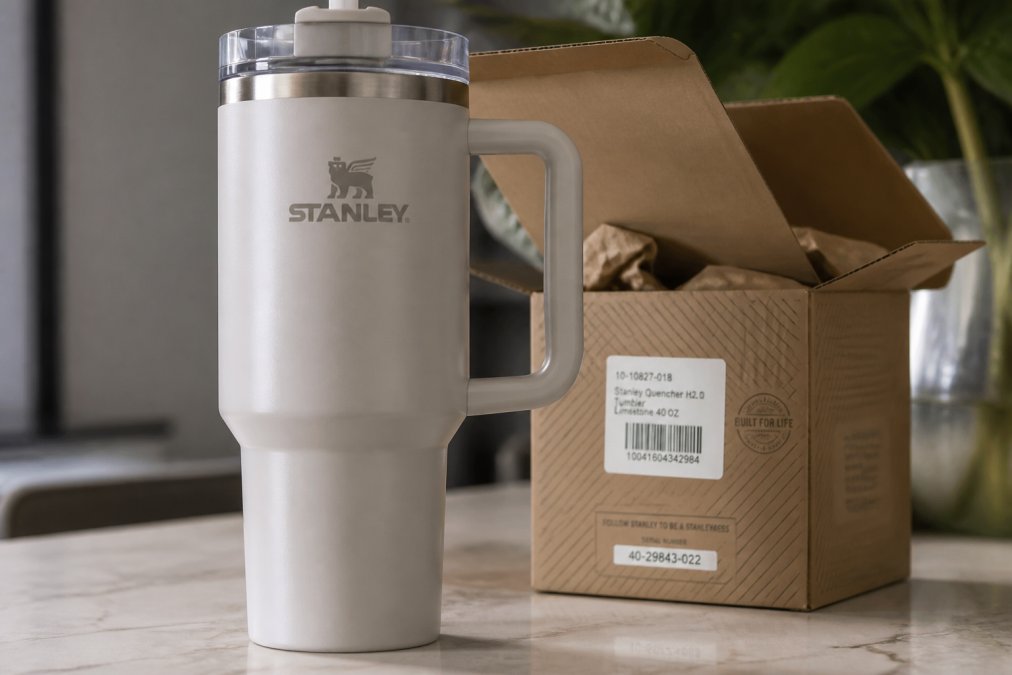
Examine the branding and logos with a magnifying glass. Authentic Stanley tumblers feature crisp, perfectly centered laser-etched logos with consistent letter spacing. Counterfeit versions often show blurry etching, misaligned text, or uneven depth in the engraving. The Stanley logo should be flush with the surface; fake versions sometimes have raised or recessed logos that catch your finger.
The lid mechanism reveals another authentication point. Genuine FlowState lids rotate smoothly with three distinct positions: open, straw, and full cover. The rotation should feel deliberate and precise, clicking into each position. Counterfeit lids often rotate too freely or feel loose and rattle.
Check the base and interior surfaces. Authentic tumblers have a perfectly smooth interior with consistent finish quality. Counterfeit versions often show visible seams, rough spots, or inconsistent polishing inside the cup. The base should show no manufacturing defects or rough edges.
Packaging authenticity matters for collectible value. Original Stanley boxes feature specific printing quality, color accuracy, and packaging materials. Counterfeit boxes use thinner cardboard and cheaper printing. If buying a sealed tumbler, examine the box carefully before opening.
Request photos from sellers showing multiple angles, the lid mechanism in action, and close-ups of branding. Legitimate sellers provide detailed imagery because they have nothing to hide. Ask specifically about the tumbler's provenance, where and when they purchased it, whether it's been used, and why they're selling.
Tracking Upcoming Drops Using a Limited Edition Tumbler Release Calendar
Stanley releases new colorways on unpredictable schedules, making systematic tracking essential. The official Stanley website maintains a product calendar showing upcoming releases. Check their site weekly, particularly on Tuesdays and Thursdays when new drops typically occur.
Email subscriptions to Stanley's official newsletter provide the earliest notification of upcoming releases. Subscribers often receive 24-hour advance notice before public availability. Set up alerts in your email to flag Stanley messages so you don't miss announcements.
Collector communities maintain unofficial but highly accurate release calendars. The r/Stanley_Tumblers subreddit has pinned posts tracking confirmed upcoming releases and rumored colorways. Facebook collector groups share screenshots of upcoming inventory and release dates shared by retail partners.
Retail partner websites like Target and Walmart sometimes list upcoming Stanley drops in their "coming soon" sections. Target's website specifically shows release dates for exclusive colorways weeks in advance.
Follow Stanley's official social media accounts for surprise drops and flash sales. Instagram and TikTok announcements often precede website availability by hours. Turn on notifications for their accounts so you catch limited releases the moment they're announced.
Use inventory tracking tools like CamelCamelCamel (for Amazon listings) or similar price-tracking services that monitor Stanley products across retailers. These tools send alerts when new colorways appear or when out-of-stock items return to inventory.
Create a spreadsheet tracking release dates, colorways, retail prices, and resale values for tumblers you're targeting. Over time, you'll spot trends in which colorways appreciate and which depreciate quickly.
How to Use a Personal Shopper for Rare Items
Personal shopping services specifically designed for collectibles have emerged as a game-changer for sourcing rare limited edition tumblers. These services employ people who monitor secondary markets, collector networks, and retail channels continuously, hunting for specific items on your behalf.
Tools, Handbags, and More offers a custom sourcing service that goes beyond typical retail. When an item isn't in our current inventory, we actively search for it through verified channels rather than simply marking it unavailable. This service works particularly well for collectors seeking specific Stanley colorways because we understand the market deeply and maintain relationships with reliable sellers.
The process begins with a detailed request. Specify the exact tumbler you're seeking, colorway, size, condition requirements, and your maximum budget. Include photos if you have reference images. The more detail you provide, the faster a personal shopper can locate matches.
Personal shoppers verify authenticity before presenting options to you. They inspect photos, communicate with sellers to confirm condition and provenance, and negotiate pricing on your behalf. This intermediary role protects you from counterfeit purchases and overpaying significantly above market rate.
Establish a realistic timeline and budget with your personal shopper upfront. Finding rare discontinued colorways might take weeks or months depending on availability. Clarify how often your shopper will update you on search progress and whether they'll present multiple options at different price points or bring you the single best match.
Understanding Resale Value and Secondary Marketplaces
Limited edition tumblers appreciate or depreciate based on scarcity, demand, and market trends. The Stanley Quencher H2.0 Winnie the Pooh Pink 40oz, for example, retailed for approximately $50 but now commands $80-120 on secondary markets due to limited production and high collector demand.
Resale value depends primarily on how quickly an item sold out at retail. Colorways that disappeared within hours typically appreciate because fewer exist in circulation. Releases that lingered in inventory for weeks usually depreciate because supply remained higher.
Discontinued colorways consistently appreciate as the pool of available tumblers shrinks. A colorway that sold 10,000 units initially becomes rarer each year as some get damaged, lost, or removed from circulation. The oldest Stanley colorways now sell for 3-5 times their original retail price (peer-reviewed research).
Condition significantly impacts resale value. Unused tumblers in original packaging command 20-40% premiums over used models. Tumblers with visible wear, scratches, or lid damage sell for 30-50% less than mint condition equivalents.
Secondary marketplaces like eBay show historical pricing data for completed sales. Search for specific colorways and filter by "sold" listings to see what collectors actually paid. Compare prices across multiple platforms before purchasing to understand fair market rates.
Strategies for Successful Checkout and Safe Transactions
Securing limited editions during official drops requires preparation and speed. Create accounts on all major retailers before drop day, completing registration during a live drop wastes critical seconds. Save your payment information, shipping address, and contact details in advance.

Set alarms for known drop times. Stanley typically releases new colorways at 10 AM Eastern on Tuesdays. Being at your computer or phone exactly at that moment dramatically improves your odds of completing checkout before inventory sells out. Use a stable internet connection, ideally wired Ethernet rather than WiFi, to minimize lag during checkout.
For secondary market purchases, use platforms with built-in buyer protection. eBay's Money Back Guarantee, Mercari's buyer protection, and PayPal's dispute resolution all offer recourse if you receive counterfeit items or items significantly different from descriptions.
Request detailed photos before purchasing from private sellers. Ask for images of the lid mechanism, branding, base, and interior. Video messages showing the tumbler in person and the lid rotating through positions provide additional assurance.
Verify seller ratings and transaction history. On eBay, buy only from sellers with 98%+ positive feedback and hundreds of transactions. On Facebook Marketplace, check their profile for how long they've been active and whether other buyers have left positive comments.
Use video call verification for high-value purchases. Request a video call where the seller shows the tumbler in real-time, demonstrates the lid mechanism, and shows the packaging. Scammers rarely agree to video verification.
Document everything for dispute resolution. Screenshot seller descriptions, save all messages, and photograph the item when it arrives.
Avoiding Common Pitfalls When Sourcing Collectible Tumblers
The biggest mistake collectors make is overpaying for items during initial hype periods. When a new colorway drops, demand temporarily exceeds supply, driving prices up 20-40% above eventual market equilibrium. Waiting 2-3 weeks often reveals that prices stabilize lower as initial buying frenzy subsides.
Chasing every new release exhausts budgets and clutters collections with mediocre items. Serious collectors establish criteria for what they'll pursue, specific colorways, certain sizes, or limited production runs. This focus prevents impulse purchases that don't align with your collection's direction.
Failing to verify authenticity before purchasing on secondary markets ranks as the costliest mistake. Counterfeit tumblers are indistinguishable from photos alone. Requesting detailed images, seller verification, and transaction protection eliminates most fraud risk.
Ignoring storage and condition maintenance destroys collectible value. Tumblers exposed to direct sunlight fade colorways. Dishwashers can damage lids and finishes. Hand-washing and storing in cool, dry environments preserves condition for future resale.
Buying from unverified sellers without transaction protection creates situations where you have no recourse if something goes wrong. Use protected payment methods exclusively: credit cards, PayPal, eBay, or Mercari's built-in systems.
Underestimating shipping costs on secondary market purchases surprises many collectors. A $100 tumbler with $25 shipping costs $125 total. Factor shipping into your maximum bid or offer price. Some sellers offer free shipping on multiple purchases, so bundling several items can reduce per-item costs.
Not understanding your local market's inventory patterns leads to overpaying. If you live in an area where specific colorways remain in retail inventory longer, waiting for local stock often beats paying secondary market premiums.
Sourcing limited edition tumblers successfully combines knowledge, patience, and strategic use of available resources. Tools, Handbags, and More simplifies this process through our custom sourcing service. When you can't find a specific colorway through standard retail channels, our team actively hunts it down. We maintain inventory of sought-after designs like the Winnie the Pooh Pink 40oz and Dior-style pattern, and we source rare items you're specifically seeking. Start with our current collection, then use our personalized sourcing assistance for those impossible-to-find pieces that complete your collection.

Frequently Asked Questions
How can I verify if a limited edition tumbler is authentic?
Check the packaging first, authentic limited edition tumblers come in pristine original boxes with correct branding and labeling. Inspect the stainless steel finish for consistent quality and smooth welds. Verify the serial number or batch code if present. Compare the colorway and design details against official product images from the manufacturer. Purchase only from verified sellers with strong transaction protection. Counterfeit versions often have uneven paint, loose lids, or misspelled text on packaging.
What are the best online marketplaces for sourcing limited edition tumblers?
Official brand storefronts offer authentic inventory but often sell out quickly. Secondary marketplaces like eBay, Mercari, and Facebook collector groups provide access to exclusive releases and rare colorways, though you must verify seller credentials. Tools, Handbags, and More maintains inventory of sought-after limited editions like the Stanley Quencher H2.0 Winnie the Pooh Pink ($50) and Dior Style Pattern ($60), offering verified authentic products with buyer protection.
How do I get notified about upcoming limited edition tumbler releases?
Follow the manufacturer's official social media channels and subscribe to their email newsletter for drop schedules. Use inventory tracking tools and restock alert apps that monitor official storefronts. Join collector community groups on Facebook and Discord where members share release dates and exclusive information. Set up notifications for new limited editions as they arrive, ensuring you don't miss sought-after colorways and designs.
What should I watch out for when buying from the secondary market?
Avoid sellers without verified credentials or transaction protection. Be cautious of prices significantly below retail, this often signals counterfeit inventory or price gouging. Request detailed photos showing the tumbler from multiple angles, packaging, and any flaws. Ask about the seller's sourcing method and whether the item is still in original packaging. Confirmed scams typically involve sellers unwilling to provide documentation or photos. Always use payment methods that offer buyer protection and refund options.
This article was written using GrandRanker