

Is Custom Product Sourcing Worth It? 2026 Guide
Table of Contents
- What Custom Product Sourcing Actually Costs
- Benefits of Custom Product Sourcing for Your Business
- Custom Sourcing vs. Buying Off the Shelf: The Real Trade-offs
- How to Find a Product Sourcing Agent You Can Trust
- Quality Control and Supply Chain Risks
- When Custom Product Sourcing Makes Financial Sense
- Conclusion: Is It Worth Your Time and Money?
- Frequently Asked Questions
Last Updated: August 31, 2026
What Custom Product Sourcing Actually Costs
Custom product sourcing involves several layers of investment that most first-time attempts underestimate. Direct costs break down into three categories: product development (design, prototyping, tooling), minimum order quantities (typically 500-1,000+ units), and operational overhead (sourcing agent fees, quality inspections, shipping, logistics).
Hidden costs surface during execution: extended lead times tie up cash, defective batches require rework, currency fluctuations affect pricing, and tariffs add unexpected fees. Many businesses find total launch costs run 30-50% higher than initial estimates (peer-reviewed research). Tools, Handbags, and More helps navigate these realities by connecting you with vetted sourcing partners who communicate costs transparently upfront, reducing surprises later.
The question isn't whether custom product sourcing is expensive, it is. The question is whether the investment generates returns that justify the expense.
Benefits of Custom Product Sourcing for Your Business
Custom product sourcing delivers tangible advantages that off-the-shelf retail cannot match. The primary benefit is differentiation: you own something your competitors don't have access to, creating brand loyalty and justifying premium pricing.
Profit margins improve significantly. A product you source directly might cost $8 per unit at MOQ versus $15 from a distributor, that $7 difference compounds across thousands of units. Customization itself becomes a selling point, whether through branded packaging, unique colors, or tailored specifications.
Quality control improves with direct manufacturer relationships. You set specifications, approve samples, and conduct audits rather than accepting whatever arrives. Supply chain transparency becomes possible, letting you verify ethical sourcing practices and know exactly where products come from.
The real benefit is strategic control: you decide what gets made, when it ships, how it's packaged, and how quality issues are resolved. That control is worth the complexity.

Custom Sourcing vs. Buying Off the Shelf: The Real Trade-offs
Buying off the shelf wins on speed and simplicity. Lead times are measured in days or weeks, not months. Inventory risk is lower because you're not locked into massive MOQs. Returns are straightforward.
Custom product sourcing trades speed for control. Your first production run takes 3-6 months minimum (sba.gov). You're locked into a minimum order quantity; if sales projections miss by 20%, you're holding excess inventory. Returns are complicated because you own the product design.
The financial comparison depends on volume and margins. A business selling 50 units per month should buy off the shelf; the MOQ alone makes custom sourcing uneconomical. A business selling 500+ units per month might break even within 6-12 months, then enjoy superior margins indefinitely.
Off-the-shelf retail offers selection and convenience. Custom product sourcing locks you into a manufacturer relationship for at least 12 months, longer if you've paid for custom tooling. Custom products are your responsibility; if a batch arrives defective, you negotiate with the factory and manage the timeline impact.
The honest answer: off-the-shelf retail is right for most businesses. Custom product sourcing is right only when higher margins, differentiation, and brand control clearly outweigh the costs and complexity.
How to Find a Product Sourcing Agent You Can Trust
A sourcing agent is your operational bridge between your business and manufacturers overseas. Finding one you can trust is the single most important decision in the custom sourcing process.
Start by defining what you need and vetting agents through references and track record. Request case studies and contact information for 3-5 past clients. Ask specific questions: Did the agent deliver on timeline? Were there quality issues? How responsive was communication?
Verify their factory relationships. Legitimate agents have audited manufacturers they work with regularly and can tell you which factories produce your product category, their MOQs, and quality standards. Understand their fee structure before committing, most charge either a percentage of order value (3-8%) or a flat fee. Get everything in writing.
Communication style matters more than you'd expect. They should respond within 24 hours, provide clear updates, and ask clarifying questions. Tools, Handbags, and More's custom sourcing service emphasizes transparency and responsiveness, connecting you with a real person who communicates clearly about timelines, costs, and realistic outcomes.
Check whether the agent has insurance and legal protections in place. A legitimate sourcing agent carries errors and omissions insurance and should provide contracts specifying what happens if the factory fails to deliver, quality issues arise, or intellectual property disputes emerge.
Quality Control and Supply Chain Risks
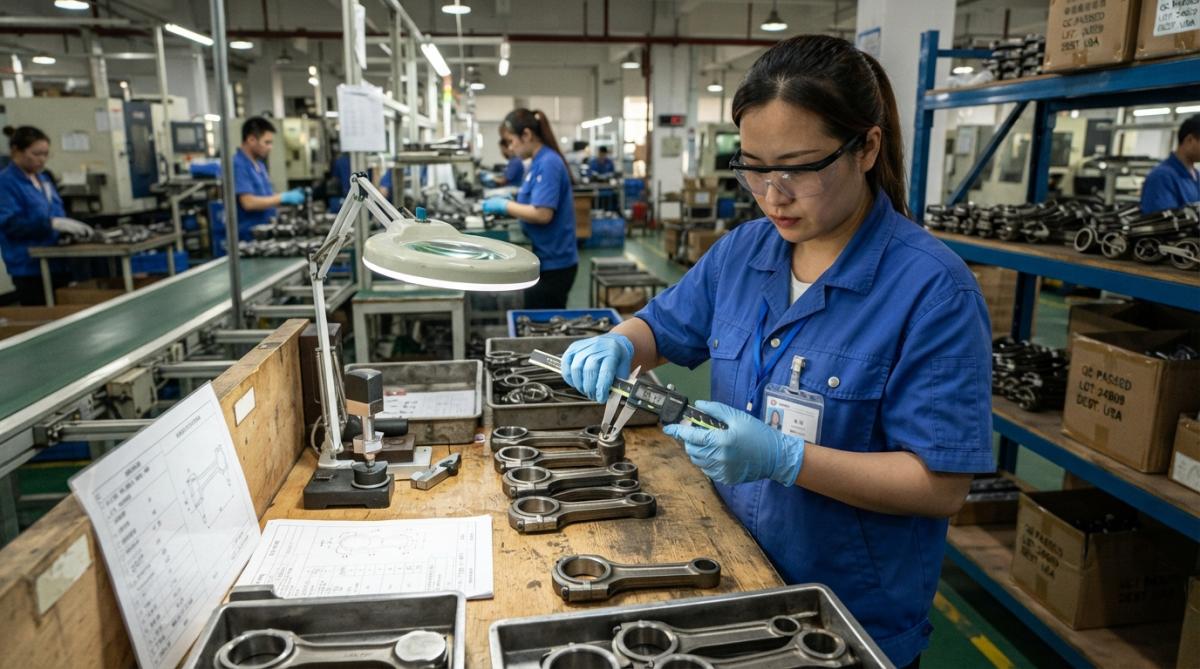
Quality control begins before manufacturing starts. You approve detailed specifications, review samples, and conduct factory audits. The critical problem: the sample doesn't match the production run. Factories produce perfect samples for approval, then cost-cutting happens during production.
Prevent this by conducting in-process quality inspections. Your sourcing agent should visit the factory mid-production to verify manufacturing matches the approved sample. This costs $500-2,000 per inspection but catches problems before thousands of units are made wrong.
Supply chain risks extend beyond the factory. Shipping containers get damaged, customs inspections delay arrival, and port congestion extends lead times. Diversification reduces vulnerability: sourcing from two manufacturers costs more upfront but protects you from catastrophic supply interruptions.
Intellectual property theft is a real risk. A factory producing your custom product has access to your design and specifications. Protect yourself with clear contracts establishing IP ownership, confidentiality clauses, and restrictions preventing the factory from manufacturing the same product for competitors.
Currency fluctuations affect pricing. A 10% swing in exchange rates can erase your entire profit margin. Lock in pricing in your home currency when possible, or build a currency buffer into cost projections.
Tariffs and compliance add unpredictable costs. Import duties vary by product category and country of origin. Some products require certifications before sale. A product costing $8 per unit becomes $10 once tariffs and compliance are factored in. Understand these costs before committing to an order.
The real supply chain risk is overconfidence. Businesses treating custom sourcing as a simple transaction encounter disasters. Businesses treating it as an ongoing relationship with multiple checkpoints, inspections, and contingency plans rarely get blindsided.
When Custom Product Sourcing Makes Financial Sense
Custom product sourcing makes financial sense only when you can project positive ROI within a reasonable timeframe. Calculate your cost per unit including manufacturing, MOQ commitment, sourcing agent fees, quality inspections, shipping, tariffs, and a buffer for defects. If total cost is $12 per unit and you're selling at $25, you have a $13 margin, until you factor in operating expenses and inventory carrying costs.
Project realistic sales volume. Most businesses overestimate first-year demand. A conservative approach assumes you'll sell 30-40% of your MOQ in the first 12 months. If your MOQ is 1,000 units and you sell 350, you're sitting on 650 units of inventory with capital locked up.
Calculate your break-even point. If your total investment is $15,000 and your per-unit profit is $8, you need to sell 1,875 units to break even. If realistic first-year sales are 500 units, custom sourcing doesn't make financial sense yet.
Custom product sourcing makes financial sense when you have existing customer demand proving you'll sell the MOQ within 12 months, your margin per unit is at least 40-50% after all costs, you're entering a market where differentiation commands premium pricing, you have capital to sustain the business through the 3-6 month lead time, and you're building a brand where exclusivity and control are core to positioning.
For commodity items with thin margins, custom sourcing rarely makes sense. For brands where exclusivity matters, it can be transformative. Expect 18-24 months before meaningful returns.
Conclusion: Is It Worth Your Time and Money?
Custom product sourcing is worth pursuing if you have existing demand you can't meet with off-the-shelf products, capital to sustain the business through development and lead time, and realistic understanding of costs and complexity.
It's not worth pursuing if you're testing an idea, undercapitalized, or competing primarily on price. The real value is control: you decide what gets made, how, when it ships, and how it's positioned. That control is worth the investment for businesses needing differentiation to survive.
When you're ready to explore custom sourcing options, Tools, Handbags, and More offers personalized assistance in finding specific items and custom products not currently in stock. Our sourcing service connects you with vetted manufacturers and handles operational complexity so you can focus on selling. Learn more about our custom sourcing service and discover how we help businesses and collectors find exactly what they need.
Frequently Asked Questions
What are the main benefits of custom product sourcing?
Custom product sourcing lets you access products tailored to your exact specifications, often at lower unit costs through bulk manufacturing. You gain competitive differentiation, control over quality standards, and the ability to source items competitors can't easily replicate. For businesses with specific needs, like custom tool configurations or branded handbags, sourcing eliminates the compromise of buying mass-market alternatives. The trade-off is longer lead times and higher upfront investment.
How much does a product sourcing agent typically charge?
Sourcing agent fees vary widely based on complexity, order size, and service level. Some charge a flat fee per project, others take a percentage of the order value (typically 3-8%), and some combine both models. The investment depends on MOQ (Minimum Order Quantity), lead time requirements, and how much vetting and compliance work is needed. Contact a sourcing service directly for a quote tailored to your specific product and volume.
What's the difference between custom sourcing and buying off the shelf?
Buying off the shelf means purchasing existing inventory from retailers or distributors, faster, lower risk, but limited customization and potentially higher per-unit costs at small volumes. Custom sourcing involves manufacturing products to your specifications, which reduces unit costs at scale, enables differentiation, but requires longer lead times, higher minimum orders, and quality control oversight. Choose custom sourcing if you need volume, specific features, or brand control; buy off the shelf if you need speed and flexibility.
What are the biggest risks of custom product sourcing?
Key risks include quality failures (defective batches), intellectual property theft, long lead times that tie up capital, supply chain disruptions, and hidden costs (shipping containers, tariffs, compliance). Vendor vetting and factory audits reduce these risks but add time and expense. Scalability challenges arise when initial production doesn't meet demand. Mitigation requires clear contracts, third-party inspection, and supplier diversification to protect your brand reputation and profit margins.
This article was written using GrandRanker