

Why Use a Drone for Home Property Inspection
Table of Contents
- Why Home Inspectors Use Drones for Property Inspections
- Drone Roof Inspection: What Gets Captured From the Air
- Drone Inspection Safety: Reducing Fall Risk on Steep and Tall Roofs
- Drone Inspection Limitations: What a Camera Cannot Detect
- FAA Rules for Commercial Drone Use Every Inspector Must Follow
- A Step-by-Step Drone Inspection Workflow From Setup to Report
- Costs, Equipment Trade-Offs, and Return on Investment
- Privacy, Property Access, and Neighbor Considerations
- Frequently Asked Questions
Last Updated: October 15, 2026
Why Home Inspectors Use Drones for Property Inspections
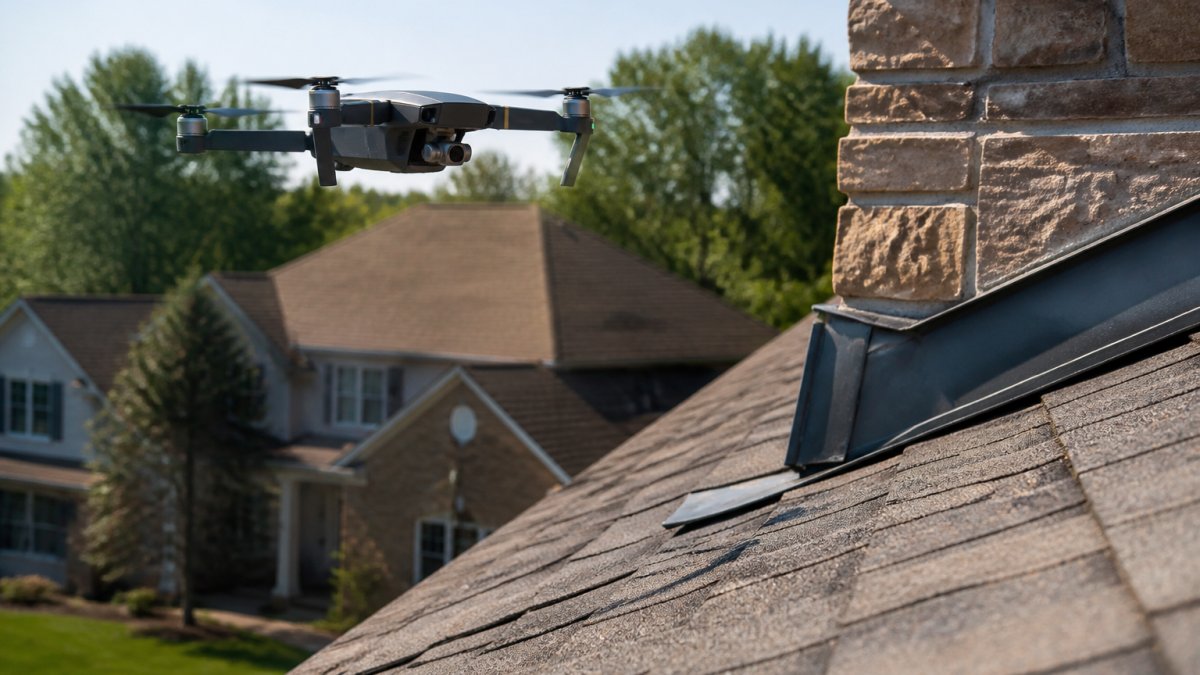
A drone for home property inspection lets an inspector see a roof, chimney, and upper walls without ever leaning a ladder against the house.
Drone property inspection is the use of a remote-controlled aircraft with a camera to view and record the exterior of a building from the air. It replaces much of the climbing, not the inspector's judgment.
The case for flying is simple. Roofs are the most dangerous part of a home inspection, and falls from height remain a leading cause of death in construction work according to the CDC falls in construction overview.
What most guides miss is that a drone is a camera platform, not an X-ray machine. It shows you the surface. It cannot tell you if the wood under a shingle is rotten.
Below, we break down what gets captured, what gets missed, the rules you must follow, and how to plan a flight from setup to report.
Drone Roof Inspection: What Gets Captured From the Air
A drone roof inspection captures high-resolution images and video of surfaces that are hard to see from the ground or risky to reach on foot. The camera does the climbing for you.
The value comes from angle and distance. A drone can hover two feet from a roof ridge and shoot straight down at a valley, something no ladder placement allows.
Chimneys, Gutters, Flashing, and Roof Edges
These four spots cause the most water damage, and all four are easy to photograph from the air.
- Chimneys: cracked crowns, missing caps, and loose mortar joints
- Gutters: clogged gutters, sagging runs, and separated seams
- Flashing: compromised flashing around vents, skylights, and wall joints
- Roof edges: lifted shingles, exposed nails, and worn drip edge
A clogged gutter or a strip of compromised flashing often looks fine from the driveway. From above, the problem is obvious.
Upper-Story Siding and Exterior Features
The upper-story siding is the second-biggest blind spot on any home. Most people never see it up close.
A drone flight documents:
- Cracked or missing siding panels
- Window and door trim gaps
- Solar panels and their mounting hardware
- Chimney caps and vent stacks
These findings feed straight into the inspection report as photo documentation. A clear image beats a written note every time.
Drone Inspection Safety: Reducing Fall Risk on Steep and Tall Roofs
Drone inspection safety starts with one fact: the safest roof is the one nobody walks on.
The hazard is not just height. It is the combination of height, pitch, surface, and weather. A 4:12 pitch (about 18 degrees) is walkable for many inspectors in dry conditions.
Consider what a drone replaces on a typical two-story home:
- Ladder setup and climb. A 28-foot extension ladder to reach a two-story eave, leveled on uneven ground, with the top resting on a gutter that may not be fastened to anything solid.
- Walking the roof plane. Every step on a steep pitch is a potential slide, and a slide on asphalt shingles rarely stops at the edge.
- Reaching over the edge. Gutters and drip edge are often checked by leaning out over the eave, which is exactly the position that turns a slip into a fall.
- Second-story wall access. Upper siding, trim, and window flashing are usually inspected from a ladder or not at all.
The math is not complicated. Every climb adds fall risk. A flight adds none.
That said, a drone is not a license to skip the roof entirely. If the aerial view shows visible damage, someone still needs to get up there safely, or the inspector notes the limit in the report.
A drone also reduces a second, less-discussed risk: damage to the home. A ladder leaned against a gutter can dent the gutter, crack a shingle, or scuff siding. A drone touches nothing.
Drone Inspection Limitations: What a Camera Cannot Detect
A drone cannot detect what it cannot see, and that is most of the building. The camera reads surfaces. It cannot read what is behind them.
Here is what a drone inspection will miss:
- Rot and soft spots under intact shingles
- Attic moisture and hidden leaks
- Structural movement inside a wall
- Electrical or plumbing problems
- Thermal issues like missing insulation
The drone inspection limitations are real, and honest inspectors say so. Aerial imagery is one tool in a full property survey, not a replacement for it.
What most guides get wrong is treating a drone flight as a complete inspection. It is a screening step. It tells you where to look closer.
If the aerial view raises a question, a hands-on check or a specialist follow-up answers it. The drone narrows the search. It does not close the case.
FAA Rules for Commercial Drone Use Every Inspector Must Follow
FAA rules for commercial drone use apply the moment an inspector charges for the flight. A paid inspection is commercial work, not a hobby.
New DRONE MAX Intelligent Aerial Photography Drone. B-348 →
The core requirements are firm:
- Remote Pilot Certificate from the FAA for anyone flying commercially
- Registration of the aircraft with the FAA
- Part 107 operating rules, including altitude and line-of-sight limits
- Airspace authorization where controlled airspace requires it
The FAA Part 107 small drone rule spells out these rules in full. Inspectors should read the source, not a summary.
Insurance matters too. A commercial policy protects the inspector if the drone damages property or injures someone. Many clients ask for proof before booking.
Get the paperwork right before the first paid flight. It is not optional.
A Step-by-Step Drone Inspection Workflow From Setup to Report
A repeatable workflow keeps every flight safe, legal, and useful. Here is how to run a drone property inspection from start to finish.
What you'll need: a registered drone with a good camera, a charged battery set, a phone or tablet for the flight app, and a checklist.

- Confirm the job and access. Get permission from the owner and note any no-fly concerns.
- Check the weather and airspace. Wind, rain, and visibility decide whether you fly at all.
- Set up a safe launch point. Clear of people, pets, and parked cars.
- Fly a slow perimeter pass. Capture wide shots of every elevation first.
- Move in for close-ups. Hover near the roof ridge, chimney, gutters, and flashing.
- Record video as you go. Video catches motion and context that stills miss.
- Land, then review on site. Re-shoot any blurry or missed angle before packing up.
- Build the report. Sort images by elevation and flag visible damage for follow-up.
Weather, Site Conditions, and Contingency Planning
Weather and site conditions decide the flight, not the schedule. Wind, rain, fog, and low light all ground a drone or ruin image quality.
Have a backup plan. If conditions turn, reschedule rather than force a flight. A blurry image is worse than no image, because it looks like evidence and is not.
Costs, Equipment Trade-Offs, and Return on Investment
Most guides skip the money question. Here is the practical version.
What the equipment costs the inspector. Consumer camera drones suitable for basic roof documentation generally start in the several-hundred-dollar range.
What a drone replaces. This is where the return on investment actually lives:
- A ladder. Cheaper up front, but it only reaches the eave, it is a fall hazard, and it can damage gutters and siding.
- A roof walk. Free in equipment terms, but it carries the highest injury risk and is not possible on steep or fragile roofs.
- A lift or boom. A bucket lift or articulating boom rental can run into the high hundreds per day in many markets, plus delivery and operator time. It is the right tool for some jobs, but it is overkill for a routine visual pass.
- A second inspector on the ground. A spotter adds labor cost without adding a viewpoint.
A drone covers a full roof in minutes, keeps the inspector off a ladder, and produces a photo record the client can keep.
The hidden costs to budget for.
- Batteries. Flight time per battery is typically in the 20-30 minute range for many consumer drones, so a full property often needs two or three batteries and a charging plan.
- Insurance. A commercial policy is a real line item, and many clients ask for proof of coverage before booking.
- Certification and training. The FAA Remote Pilot Certificate requires a knowledge test and a fee, and study time is real time.
- Spare parts and refresh. Props, gimbal guards, and occasional repairs are part of owning a working drone.
At Tools, Handbags, and More, we carry drones for hobbyists and working pilots alike. Our FAA drone registration guidance reminder applies to every aircraft you fly for pay.
If you need a specific model we do not stock, our custom sourcing service will track it down for you.
Privacy, Property Access, and Neighbor Considerations
Privacy and property access matter as much as the flight itself. A drone camera can see into a neighbor's yard, and that can cause real problems.
Follow these rules:
- Fly only over the property you were hired to inspect. Stay off neighboring lots.
- Get owner permission in writing. It protects you and the client.
- Avoid windows and private spaces. Point the camera at the building, not through glass.
- Tell neighbors when asked. A short explanation prevents most complaints.
The FAA drone privacy guidance and local rules both apply. A clean flight is a legal flight and a polite one.
If a neighbor objects, pause and talk. Most concerns fade once people understand the purpose.
Frequently Asked Questions
Why do home inspectors use drones instead of climbing on the roof?
Drones let inspectors view steep, tall, or fragile roofs without putting anyone on a ladder. A drone inspection captures high-resolution images and video of shingles, flashing, chimneys, and gutters in minutes. This reduces fall risk, saves time, and produces photo documentation that goes straight into the inspection report. For roofs that are unsafe to walk, a drone is often the only practical way to get a close visual assessment.
What can a drone detect during a home inspection?
A drone can spot visible damage such as cracked or missing shingles, compromised flashing, sagging roof lines, clogged gutters, and damage around chimneys and roof ridges. It also captures upper-story siding and exterior features that are hard to see from the ground. What it cannot do is test materials or detect hidden moisture, so any aerial findings should trigger a hands-on follow-up by a qualified inspector or roofer.
Do home inspectors need a license to use a drone?
Yes. Under FAA rules for commercial drone use, an inspector flying a drone as part of a paid home inspection must hold a Remote Pilot Certificate under Part 107. The drone must be registered, flown within visual line of sight, and kept below 400 feet. Some inspectors hire a licensed pilot instead. Ask any inspector to confirm their certification before the flight.
Are drone photos enough to assess roof damage on their own?
No. Drone imagery is excellent for a visual assessment, but it cannot confirm soft spots, moisture intrusion, or structural weakness. Use aerial photos as the first layer of evidence, then have a roofer or inspector physically check any flagged area. This two-step approach gives you both the wide view and the hands-on confirmation needed for repair decisions.
Choosing the right drone for inspection work comes down to camera quality, flight stability, and battery life, and getting those wrong wastes both money and flight time. At Tools, Handbags, and More, we help you sort through the options with a wide range of drones, a custom sourcing service for models we do not stock, and real help finding the exact gear you need. Get started with Tools, Handbags, and More and fly your next inspection with the right equipment.